
How to Choose the Best Skin Care Products for Women?
Choosing the right Skin Care Products For Women starts with understanding your own skin, not following every trend. A cleanser that leaves one person comfortable may make another feel tight or dry. Notice how your skin responds after washing, during the day, and when the weather changes. Small details matter: a shiny forehead, flaky cheeks, or stinging after applying a new cream. These clues can help you choose products suited to your needs.
Start with a few basics, such as a gentle cleanser, moisturizer, and broad-spectrum sunscreen. Then consider targeted ingredients for concerns like uneven tone or occasional breakouts. Read the label, follow product directions, and introduce new items one at a time. A patch test on a small area can reveal irritation before you apply a product more widely. It is not a guarantee, though. Skin can be unpredictable, and more products do not always mean better results. If a rash, persistent irritation, or worsening condition appears, stop using the product and seek advice from a qualified healthcare professional. The best routine is practical, comfortable, and flexible—not a perfect shelf of expensive bottles. That can take patience.
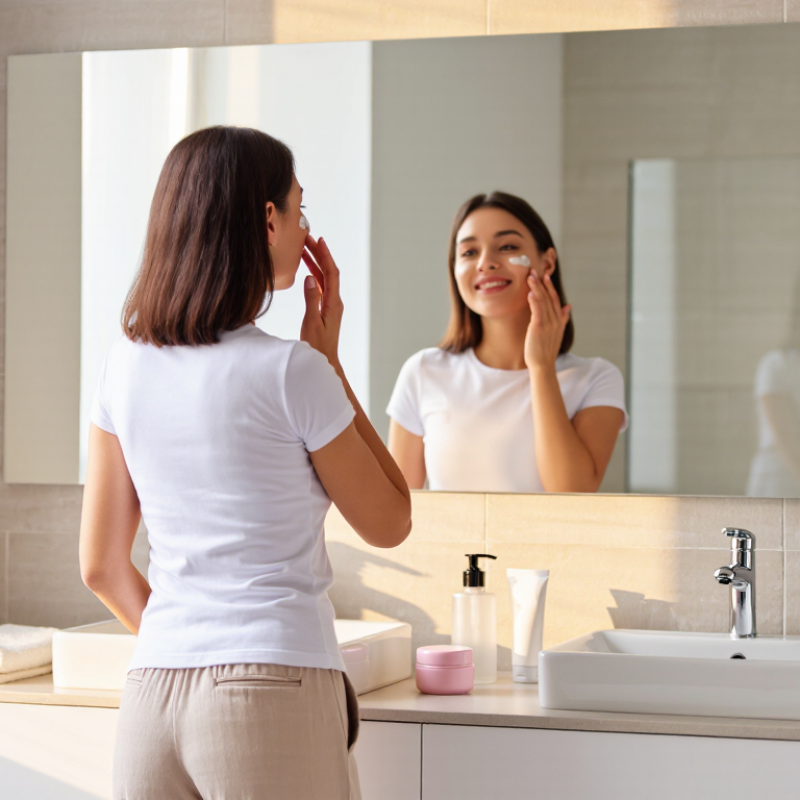
Identify Skin Needs: AAD Says Acne Affects Up to 50 Million Americans Yearly
Acne is not just a teenage concern. The American Academy of Dermatology says it affects up to 50 million Americans each year. It can appear as blackheads, whiteheads, or tender red bumps along the jaw and cheeks. For women choosing skin care, start by noticing when breakouts occur and where they cluster. A brief note about new products, menstrual cycles, or irritation can reveal patterns, though it cannot diagnose a cause.
Skin varies. A routine that helps one person may sting another.
Choose a gentle cleanser, a lightweight moisturizer labeled non-comedogenic, and broad-spectrum sunscreen. Wash with lukewarm water; scrubbing can leave skin sore without clearing acne. If adding an over-the-counter acne ingredient, such as benzoyl peroxide or salicylic acid, try one at a time and follow its label.
Start gradually. More is not better. Stop if burning or swelling develops, and seek medical advice for painful, scarring, or persistent acne.
A dermatologist can tailor care, especially when breakouts change suddenly or affect confidence. I would not assume every blemish needs stronger treatment; sometimes the routine itself is the irritant.
Pregnant or planning-to-be-pregnant women should ask a clinician before using acne medicines.
Choose Daily Protection: AAD Recommends Broad-Spectrum Sunscreen at SPF 30+
The American Academy of Dermatology recommends a broad-spectrum sunscreen with SPF 30 or higher. “Broad-spectrum” means the product protects against both UVA and UVB rays. SPF 30 is a useful baseline, not a reason to stay in the sun longer. Choose a sunscreen that feels comfortable enough to use every day; a perfect product left in the drawer offers little protection. Apply it generously to exposed skin, including your face, neck, ears, and hands. Small areas matter.
Make sunscreen the final step of your morning skin care routine, before makeup. Apply it about 15 minutes before going outdoors when the label advises, and reapply every two hours outside. Reapply sooner after swimming, sweating, or towel drying. A rushed morning can leave gaps; the hairline and tops of the ears are easy to miss.
Shade, sunglasses, and a hat add useful protection, especially during long periods outdoors. Sunscreen is not a force field, and no routine is flawless. Check the package directions and expiration date, and ask a dermatologist for guidance if you have a skin condition or react to sunscreen.
Match Actives to Goals: FDA Lists Benzoyl Peroxide as an OTC Acne Ingredient
Choosing skin care starts with the concern you want to address, not the most crowded shelf. For acne-prone skin, benzoyl peroxide is an established over-the-counter active ingredient. FDA includes it among ingredients used in OTC acne products that meet applicable requirements; that does not mean every product suits every person. It works against acne-causing bacteria and can help clear breakouts, but dryness, redness, or peeling may occur. Stronger is not automatically better. That assumption is easy to make, and worth questioning.
Check the active ingredient and directions on the Drug Facts label. Start with a lower strength or less frequent use, especially if your skin is sensitive. Use a small amount on clean, dry skin, and add a simple, fragrance-free moisturizer if needed. Benzoyl peroxide can bleach towels, pillowcases, and clothing, so use white fabrics or rinse carefully. If irritation becomes severe, stop using it and seek advice from a health professional. People with a history of serious reactions should consult a clinician before use.
Tips: Test a small area first. Keep it away from eyes and lips. Use sunscreen during the day, and introduce only one new active at a time. Notice how your skin responds; routines need adjusting.
Screen for Irritation: AAD Advises Patch-Testing New Products for 7–10 Days
How to Choose the Best Skin Care Products for Women?
A new serum can look gentle and still cause redness, itching, or swelling. The American Academy of Dermatology Association advises testing a new skin care product on a small area twice daily for 7–10 days. Try a quarter-sized patch on your inner forearm, keeping the product there for as long as its directions recommend. This repeated check is more useful than a quick dab before bed. It feels fussy. That is the point.
Watch for burning, persistent redness, bumps, or swelling, and stop using the product if these appear. The AAD’s 7–10-day recommendation is practical guidance, not a guarantee against future irritation or allergy. Skin can react differently on the face, especially around the eyes, where it is more delicate. A quiet patch test also cannot rule out every ingredient sensitivity. That limitation matters.
Keep the test simple: use one new product at a time and note the date, location, and any change in your skin. Starting several products together makes the culprit hard to identify. If a reaction develops, wash the area gently and avoid retrying the product. A dermatologist can help assess recurring or severe reactions; bring the product’s ingredient list if possible. Even careful testing has blind spots.
How to Choose the Best Skin Care Products for Women?
Patch-Test New Products for 7–10 Days
The highlighted bar shows the 7–10 day patch-testing window. Monitor the test area for irritation, and stop using the product if a reaction occurs.
Check Use Instructions: AAD Says Reapply Sunscreen Every Two Hours Outdoors
Choosing skin care products starts with your skin’s needs, not a crowded bathroom shelf. Notice whether your skin feels tight, oily, or easily irritated after washing. A gentle cleanser and a moisturizer suited to your skin type are practical starting points. Introduce one new product at a time, and watch for redness or stinging. Small changes are easier to assess.
Sun protection deserves careful attention. The American Academy of Dermatology advises reapplying sunscreen every two hours when outdoors. Reapply sooner after swimming or sweating, and follow the product’s directions. A morning application may not protect skin through a long afternoon outside. Keep the instructions where you can check them; it is easy to lose track of time during a walk or while gardening. Apply sunscreen to exposed areas, including the ears and the back of the neck. No sunscreen makes sun exposure risk-free, so shade and protective clothing can help, too.
Tips: Set a phone reminder for reapplication. Keep sunscreen in your day bag, but avoid leaving it in a hot car. Check the label before use, especially if the product irritates your skin. A routine can be simple. It may take a little trial and adjustment.
Related Posts
-
China Top Skin Products Manufacturers for Global Buyers
-
Why Are Basic Skin Care Products Essential for Buyers?
-
10 Best Skin Treatment Products for Global Buyers
-
Exploring the Unique Features and Applications of Best Care Products for Global Buyers
-
The Ultimate Guide to Selecting the Best Beauty and Personal Care Products for Your Routine
-
Discover Premium Beauty Care Products from China's Finest Manufacturing Factory