
Best Skin Care Manufacturers in China for Global Buyers
Choosing a Chinese Skin Care manufacturer is a sourcing decision with consequences for product quality, consistency, and delivery. China offers buyers a broad supplier base, from formulation laboratories to facilities equipped for filling, packaging, and export orders. But a polished website is not proof of a capable factory. Details matter.
The market opportunity is significant. McKinsey & Company’s 2023 beauty report projected that the global beauty market could reach about $580 billion by 2027, with roughly 6% annual growth. That forecast covers beauty broadly, not China’s manufacturing sector alone. Still, it helps explain why international buyers are seeking reliable partners for creams, serums, and cleansers. Ingredient traceability, batch records, sample consistency, and clear communication deserve careful review before a large order. A low quotation can look attractive. It may not tell the whole story.
Dermatologist and skincare entrepreneur Dr. Howard Murad has said, “Healthy skin is a reflection of overall wellness.” His perspective is a useful reminder: product claims should be matched by thoughtful formulation and transparent quality practices. This guide examines manufacturers serving global buyers, including their capabilities, product ranges, and practical points to verify. No supplier is perfect. Buyers should independently assess samples, documentation, production capacity, and communication before committing. A few unanswered questions early on can become expensive later.
China’s Skin Care Manufacturing Landscape
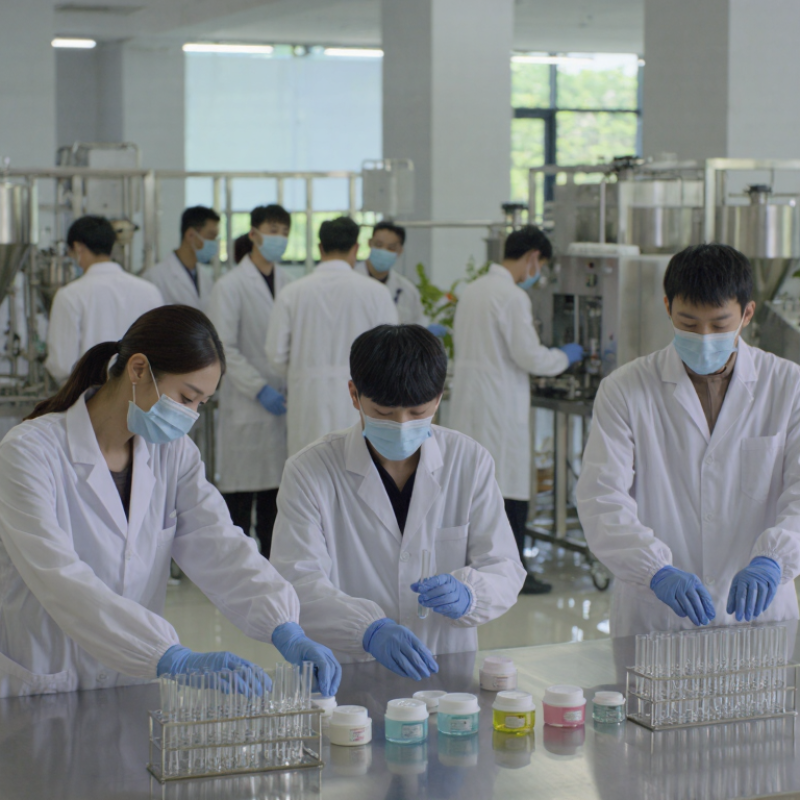
China’s skin care manufacturing landscape is broad, with large-scale plants, specialist labs, and contract facilities serving different production needs. Capabilities can vary sharply. A site may handle creams well but outsource parts of packaging or testing. Buyers should ask who performs each step.
On a factory visit, look beyond bright rooms and new equipment. Ask to see how a batch moves from weighing to filling, and how deviations are recorded. Check whether the laboratory measures pH, viscosity, and microbial quality against written specifications. Stability work and packaging-compatibility checks matter too; a formula can change when it meets a pump, jar, or liner. Small details count.
China’s supply network can offer access to ingredients, packaging, and production capacity within one region, but proximity does not guarantee smooth coordination. Confirm minimum order quantities, sample lead times, change-control procedures, and who approves substitutions. Request recent, relevant documents, then verify that they match the actual facility and product category. Paperwork is useful, not magic. A polished tour can still leave gaps, so treat it as a starting point. The best-fit manufacturer is the one whose controls, communication, and scale match the buyer’s needs—not simply the lowest quote.
China’s Skin Care Manufacturing Landscape
Key regulatory milestones for global buyers to consider when assessing manufacturing readiness.
The chart highlights major cosmetics compliance milestones: China’s Cosmetics Supervision and Administration Regulation took effect in 2021, production and operation rules followed in 2022, and the transition period for full safety assessments ended in 2023. These dates describe regulatory requirements, not market share or factory output.
How Global Buyers Can Evaluate Chinese Skin Care Manufacturers
Global buyers should evaluate a Chinese skin care manufacturer as a technical partner, not just a low-cost source. Price is only one signal. Grand View Research estimated the global skincare market at USD 135.83 billion in 2022. Its 2023 market report projected a 4.7% compound annual growth rate through 2030. That scale makes repeatable quality essential.
Ask for recent audit records, a quality-system overview, and batch traceability from raw material to finished jar. Request stability and packaging-compatibility data for your exact formula. A clear vial can behave differently from an airless pump. Review microbial testing, release criteria, complaint handling, and deviation records. Paperwork matters. Compare pilot batches against signed specifications, including odor, color, viscosity, fill weight, and closure torque. Do not rely on a showroom sample alone.
Confirm who approves formula changes, how long retained samples are stored, and whether production records can be shared promptly. Check minimum order quantities, lead times, packaging sourcing, and capacity during peak seasons. Ask for references from comparable export projects, then verify claims independently. A polished factory tour is only a starting point, not proof. Even capable suppliers can miss a detail; document responsibilities before approving production.
Leading Skin Care Manufacturers in China and Their Specialties
China’s skin-care manufacturers often specialize by formula type and production scale. Some focus on facial cleansers, toners, and emulsions, while others handle creams, masks, or sunscreen. For global buyers, the useful question is not simply who can make a product, but who can repeat its texture, fragrance, and fill weight across production runs. Details matter.
The market is substantial, but growth should not be assumed. China’s National Bureau of Statistics reported cosmetics retail sales of 414.2 billion yuan in 2023, up 5.1% year over year. That figure covers cosmetics broadly, not skin care alone. It signals market activity, not guaranteed demand for any particular formula. Buyers should match a factory’s strengths to their target customer and test samples under realistic storage and shipping conditions.
Manufacturers serving international buyers may offer OEM or ODM development, packaging coordination, and stability testing. Ask for evidence of quality controls, such as documented batch records and relevant GMP systems, rather than relying on a polished showroom. I would not treat one excellent sample as proof of consistent output. One limitation: a factory’s strongest category may not fit every brief. Check pilot-batch results, ingredient specifications, and communication speed before committing to larger orders.
Production Capabilities, Quality Systems, and Regulatory Compliance
A capable Chinese skin care manufacturer should show more than a large factory floor. Ask for batch records, equipment maintenance logs, and evidence that filling lines are cleaned between product runs. McKinsey’s 2023 beauty market report estimated the global market could reach about US$580 billion by 2027, with roughly 6% annual growth. That pressure can encourage faster launches, but speed is not proof of process control. Check whether the manufacturer can scale a pilot formula without changing its mixing, heating, or filling conditions.
Quality systems matter at each handoff. ISO 22716 offers good manufacturing practice guidance for cosmetics, including production, storage, and shipment. Review how deviations are documented, who approves corrective actions, and whether finished batches have traceable test results. Ask to see stability and microbiological testing plans, not just a certificate. Small gaps matter. A neat audit file may still miss a real production weakness.
Regulatory readiness depends on the destination market and product claims. For exports, request ingredient specifications, safety documentation, labeling support, and change-control records. Confirm how the supplier handles requirements such as the EU Cosmetics Regulation or US MoCRA, where applicable. A third-party audit can add perspective, but it cannot replace your own document review. No audit is perfect. Recheck critical details against the product and market before signing off.
Sourcing, Customization, and Export Considerations for Global Buyers
Choosing a skincare manufacturer in China starts with a clear product brief, not a price list. Specify the product format, target market, packaging size, and expected order volume. Ask how the factory controls raw-material intake, filling, and batch records. Request recent stability and microbiological test reports for the formula you plan to buy. Review samples under ordinary conditions: check the scent, texture, pump function, and how the product behaves after repeated use. One sample is not enough.
Customization can cover fragrance, texture, packaging, and label layout, but every change may affect testing, cost, and lead time. Confirm who owns the formula and artwork, and get approval samples in writing before production. For export, request an ingredient list, product specifications, safety documents, and batch-level quality records. Then verify the destination market’s cosmetic requirements independently; rules and required documents differ. I would be cautious of promises that every formula suits every market. That sounds convenient, but rarely tells you enough. Allow time for label review, production checks, and shipping paperwork, since a delayed document can hold up a finished shipment.
Best Skin Care Manufacturers in China for Global Buyers — Sourcing, Customization, and Export Considerations
| Evaluation Area | What Global Buyers Should Check | Useful Evidence or Questions | Export and Sourcing Considerations |
|---|---|---|---|
| Product and category fit | Confirm experience with the intended formats, such as creams, lotions, cleansers, serums, or sunscreens. | Request relevant product specifications, sample options, and examples of comparable manufacturing processes. | Check whether the product’s ingredients, claims, and intended use comply with the destination market’s cosmetics rules. |
| Manufacturing quality system | Review written procedures for production, sanitation, batch records, quality checks, and handling of nonconforming products. | Ask for current audit or certification documentation where applicable, and verify its scope and issuing body. | ISO 22716 provides cosmetics good manufacturing practice guidance; buyer requirements and destination-market rules may differ. |
| Customization and formulation | Clarify whether the project uses an existing formula, a modified formula, or a new development. | Agree on the sample approval process, formula ownership, confidentiality, change control, and permitted ingredient substitutions. | Review ingredient restrictions and product-claim requirements in each target country before finalizing the formula or packaging copy. |
| Testing and product documentation | Establish which safety, stability, compatibility, and microbiological tests are appropriate for the product and market. | Request available test reports, ingredient information, batch specifications, and a certificate of analysis where applicable. | Confirm who arranges and pays for any additional tests or assessments required by the destination market. |
| Packaging and labeling | Check packaging compatibility, closure performance, material options, print quality, and production lead times. | Approve artwork and packaging specifications in writing; confirm label language, ingredient declaration, net contents, and responsible-party details. | Label requirements vary by market. Have local regulatory requirements checked before printing commercial quantities. |
| Minimum order and production planning | Get separate order requirements for formula, packaging components, and finished goods; these may differ by project. | Request a written quotation showing quantities, tooling or setup charges, sample costs, payment terms, and production milestones. | Treat minimum order quantities and lead times as supplier-specific; confirm them for the selected formula and packaging. |
| Regulatory responsibilities | Identify which party is responsible for product classification, safety documentation, notifications, registrations, and market access. | For China-market products, check applicable NMPA requirements under China’s cosmetics regulatory framework, including registration or filing obligations where relevant. | Do not assume China-market compliance automatically satisfies requirements in the United States, European Union, or other destinations. |
| Traceability and change control | Check how raw materials and finished batches are identified, recorded, retained, and investigated if an issue occurs. | Agree on batch coding, retained samples, complaint handling, recall cooperation, and advance notice of material or process changes. | Include record-access and issue-escalation expectations in the quality agreement or supply contract. |
| Export documents and logistics | Confirm the shipping method, packaging for transit, shipment schedule, insurance arrangements, and delivery terms. | Agree who prepares the commercial invoice, packing list, transport documents, and any destination-specific certificates or declarations. | Document requirements depend on the product, route, and destination. Confirm customs and import requirements with qualified parties. |
| Supplier verification and contract | Verify the legal entity, manufacturing location, subcontracting arrangements, communication process, and quality responsibilities. | Use a written agreement covering product specifications, acceptance criteria, intellectual property, confidentiality, payment, delivery, and remedies. | Consider an independent factory audit or inspection when the order value, product risk, or buyer policy warrants it. |
Related Posts
-
7 Essential Basic Skin Care Products Every Global Buyer Should Know
-
Unique Examples of Innovative Skin Care Products Transforming Beauty Routines
-
Discover the Secrets of Youthful Skin with Innovative Skin Care Products
-
10 Best Skin Treatment Products for Global Buyers
-
Unlock the Secrets of Skin Products: 5 Innovative Features Every Global Buyer Must Know
-
China Top Skin Health Products for Global Buyers?