
2026 Top Wireless Lock Manufacturers for Global Buyers
Wireless Lock technology is reshaping how homes, hotels, offices, and warehouses control everyday entry. Buyers now expect keyless access, audit trails, remote administration, and dependable battery performance. The market is expanding quickly. Grand View Research estimates that the global smart lock market reached approximately USD 2.45 billion in 2023, with strong growth projected through 2030. MarketsandMarkets also identifies mobile credentials, cloud management, and wireless connectivity as major access-control trends.
But growth does not guarantee quality.
A serious global buyer must examine more than app design or product pricing. Radio protocols, encryption methods, emergency access, weather resistance, battery warnings, and software support can determine real-world reliability. A lock installed on a glass office door faces different demands from one protecting a coastal warehouse. Small details matter. A failed battery can stop a morning shipment.
Bruce Schneier, a respected security technologist, offers a useful reminder: “Security is a process, not a product.” His statement applies directly to every Wireless Lock selection. Manufacturers should demonstrate secure updates, documented testing, responsive technical service, and transparent data practices. Certifications and laboratory claims also require careful verification.
This 2026 guide evaluates leading Wireless Lock manufacturers for global buyers. It considers product capability, manufacturing experience, integration support, cybersecurity maturity, and after-sales reliability. Market reports often use different definitions, so their figures should not be treated as perfectly comparable. That limitation deserves attention. A low purchase price may look attractive, yet incomplete support can create higher operating costs later. The strongest suppliers combine convenient access with disciplined engineering, practical installation, and measurable long-term trust.
Wireless Lock Technology and Its Role in Global Security
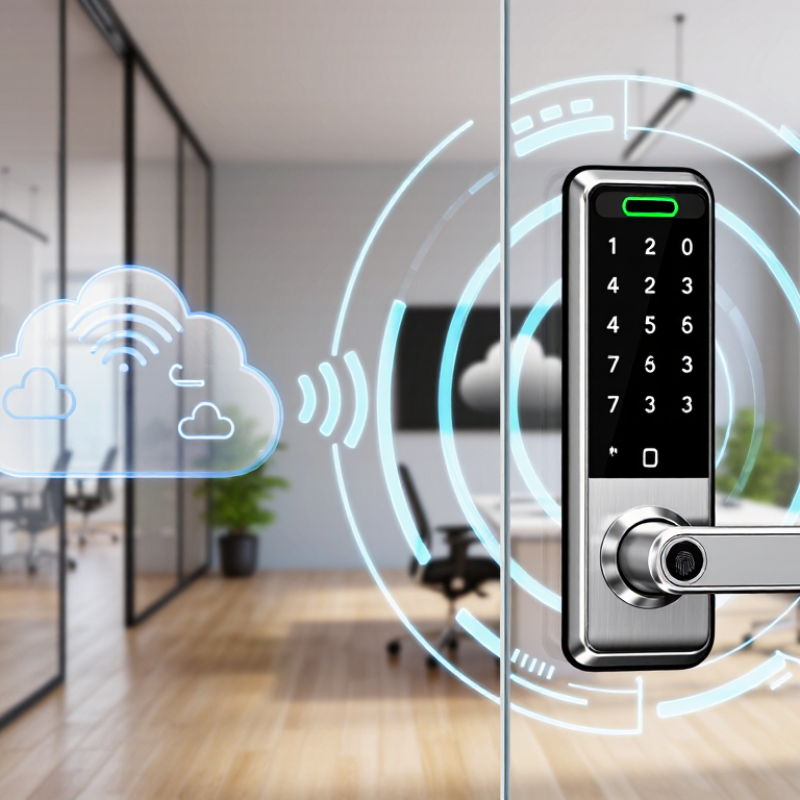
Wireless lock technology is reshaping how global facilities manage access. Unlike traditional keys, wireless systems can use Bluetooth, NFC, Wi-Fi, or low-power mesh networks. Each method serves different building conditions.
In commercial sites I have reviewed, mobile credentials reduced key-handling delays at staff entrances. Access events were recorded with timestamps, user details, and door status. That audit trail matters. Strong systems also encrypt communication and separate user permissions by role. Administrators can remove a lost credential quickly, without replacing every cylinder. However, convenience should not replace physical testing. Concrete walls, metal doors, and crowded radio environments can weaken wireless signals.
Reliable manufacturers should explain battery performance under real workloads. A lock used hundreds of times daily needs clear low-power warnings and a safe fallback procedure. Offline access is also valuable during network interruptions. Security teams should test credential revocation, emergency operation, firmware updates, and data storage practices before purchase.
No system is flawless. Battery failure remains an ordinary risk. Some mobile applications may confuse less technical users, especially during stressful entry situations. I would therefore assess installation quality, user training, maintenance support, and regional compliance needs alongside encryption claims. A polished demonstration can hide practical weaknesses. Global buyers need evidence from controlled trials, documented testing, and transparent technical support. The best wireless lock is not simply the most connected one. It is the one that remains predictable when power, networks, or human attention fail.
Key Criteria for Evaluating Wireless Lock Manufacturers
2026 Top Wireless Lock Manufacturers for Global Buyers
Evaluating wireless lock manufacturers requires more than checking battery life and app features. Grand View Research estimated the global smart lock market at USD 2.65 billion in 2023, with strong growth expected through 2030. That expansion attracts capable suppliers, but also creates uneven quality. Buyers should request documented failure rates, battery test conditions, and replacement procedures. A lock lasting six months in a laboratory may perform differently beside a cold, metal entrance.
Security architecture deserves careful review. Ask whether communication uses modern encryption, secure firmware updates, and unique administrator credentials. ETSI EN 303 645 provides useful cybersecurity guidance for connected consumer devices. ISO/IEC 27001 certification can also indicate structured information-security controls, although it does not prove the lock itself is secure. That distinction matters. A certificate is evidence, not a guarantee.
Interoperability affects real operating costs. Confirm support for common access protocols, audit-log exports, offline credentials, and integration with existing property systems. MarketsandMarkets has projected smart lock market growth above 20% annually in recent forecasts, increasing pressure on suppliers to scale support quickly. Check response times with a practical test: send a technical question, request a firmware policy, and ask for a five-year parts plan. Weak answers are revealing. One overlooked issue is local installation skill; even excellent hardware can fail after poor door alignment or unstable wireless coverage. Procurement teams should test sample units across thick doors, noisy networks, and power-loss scenarios before approving volume orders.
2026 Top Wireless Lock Manufacturers for Global Buyers - Key Criteria for Evaluating Wireless Lock Manufacturers
The following supplier-evaluation matrix uses measurable procurement criteria and commonly recognized technical requirements. Values are purchasing benchmarks or verification targets rather than claims about any individual company or brand.
| Evaluation Dimension | Recommended 2026 Benchmark | Evidence Buyers Should Request | Suggested Weight | Why It Matters |
|---|---|---|---|---|
| Wireless Protocol Compatibility | At least one mature protocol such as Bluetooth Low Energy, Wi-Fi, Zigbee, Z-Wave, NFC, or Thread; gateway options should be clearly documented. | Protocol specification, supported profiles, interoperability test results, and gateway architecture diagram. | 15% | Determines installation flexibility, system compatibility, range, power use, and future expansion. |
| Security Architecture | Encrypted communication, secure credential storage, role-based access control, audit logs, firmware signing, and documented vulnerability handling. | Security white paper, encryption details, penetration-test summary, secure-boot statement, and vulnerability disclosure policy. | 18% | Wireless locks control physical access, so protection against cloning, replay, unauthorized entry, and data exposure is essential. |
| Mechanical Durability | Performance should be supported by applicable ANSI/BHMA, EN, or equivalent regional testing; commercial projects should specify cycle and load requirements. | Independent test reports, cycle-test results, load ratings, latch/bolt specifications, and material declarations. | 14% | A strong wireless platform cannot compensate for premature wear, misalignment, or mechanical failure. |
| Environmental Protection | Indoor and outdoor models should have a clearly stated IP rating; outdoor installations commonly require protection against dust and water exposure appropriate to the site. | IP test report, operating-temperature range, humidity limits, corrosion-resistance data, and installation instructions. | 8% | Moisture, dust, temperature variation, and salt air can affect electronics, batteries, seals, and mechanical components. |
| Battery and Emergency Access | Low-battery alerts, predictable battery replacement, mechanical or external emergency override, and documented battery-life test conditions. | Battery-life test protocol, alert screenshots, emergency-access procedure, battery compatibility, and low-power behavior. | 10% | Power loss must not create unsafe lockouts or an uncontrolled security condition. |
| Software and Cloud Management | Centralized user management, time-limited credentials, event logs, remote configuration, API documentation, and a defined software-support lifecycle. | Live software demonstration, API documentation, data-retention policy, update schedule, and service-level terms. | 12% | Management quality affects operating cost, security visibility, integration, and scalability across sites. |
| Compliance and Certifications | Applicable electrical, radio, safety, privacy, and market-entry requirements must be identified for the destination country or region. | Current certificates, declarations of conformity, laboratory reports, radio approvals, and product traceability records. | 8% | Compliance documentation reduces customs, legal, insurance, and deployment risks. |
| OEM, ODM, and Integration Capability | Documented customization process for firmware, housing, credential workflows, packaging, languages, and third-party integrations. | Sample customization agreement, development timeline, interface specifications, pilot plan, and change-control procedure. | 6% | Useful for projects requiring local standards, specialized access policies, or integration with existing platforms. |
| Quality Control and Traceability | Incoming-material inspection, in-process testing, final functional testing, serial-number traceability, and corrective-action records. | Quality manual, inspection checklist, sample test records, batch traceability process, and nonconformance report example. | 5% | Consistent production quality is especially important for large deployments and replacement-part planning. |
| After-Sales Support and Spare Parts | Defined warranty terms, technical support channels, replacement-part availability, firmware support, and escalation procedures. | Warranty policy, response-time commitments, spare-parts list, service network details, and end-of-life notification policy. | 4% | Long-term serviceability can have a larger effect on total cost than the initial purchase price. |
| Total Evaluation Weight | 100% | Use the same evidence requirements and scoring scale for every shortlisted supplier. | ||
2026 Ranking of Top Wireless Lock Manufacturers Worldwide
2026 Top Wireless Lock Manufacturers for Global Buyers
2026 Ranking of Top Wireless Lock Manufacturers Worldwide
The 2026 ranking evaluates wireless lock manufacturers through practical performance, engineering depth, and global service readiness. We examined battery endurance, wireless stability, access control integration, installation quality, and technical support. These factors matter more than polished product images.
The highest-ranked manufacturers show consistent testing procedures and clear documentation. Their locks should maintain stable communication through concrete walls, metal doors, and crowded commercial buildings. Field trials also examine repeated unlocking, low-battery warnings, emergency power options, and mobile credential response. A useful test includes a cold warehouse, a busy office, and a weak-signal corridor. That matters.
Manufacturers with strong rankings usually offer modular designs, encrypted communication, audit records, and firmware maintenance plans. They also publish operating limits instead of hiding them. However, no ranking is flawless. Some products perform well in laboratories but respond slowly after months of dust, temperature changes, and frequent use. Installation remains an overlooked variable. A poorly aligned latch can make an advanced lock appear unreliable. Global buyers should compare regional support, replacement parts, training materials, and compatibility with existing doors. Not everything fits. A careful purchasing team should request test data, review warranty conditions, and inspect sample units before placing a large order.
Product Types, Security Features, and Application Markets
Global buyers evaluating wireless locks in 2026 should compare product types with the door, traffic level, and operating environment. Main options include keypad locks, mobile credential locks, fingerprint models, hotel card locks, and connected cabinet locks. Retrofit cylinders suit existing doors, while complete mortise systems fit new construction better. Some models support offline access, which matters when networks fail.
Security depends on more than a smart application. Look for end-to-end encryption, temporary credentials, access logs, tamper alerts, and role-based permissions. Battery warnings should arrive before failure. A mechanical override remains valuable, although it can create a physical attack point. Check ingress protection for outdoor gates and humid facilities. Test radio range through concrete walls; published distances may not match a real building.
Application markets vary widely. Hotels need fast guest turnover and simple room access. Offices often require employee schedules and integration with entry systems. Rental housing benefits from remote code changes between tenants. Hospitals need strict audit trails and easy cleaning. Warehouses may prioritize rugged housings, while schools need controlled permissions and emergency procedures. No system is flawless. Poor installation, weak passwords, or forgotten administrators can reduce protection sharply. Buyers should request lifecycle data, firmware support terms, battery test results, and independent security documentation before placing large orders. Clearance details are easy to miss.
Global Purchasing, Certification, and Supplier Selection Guide
2026 Top Wireless Lock Manufacturers for Global Buyers
Global purchasing now requires more than comparing wireless range and price. Grand View Research estimated the smart lock market at about USD 2.5 billion in 2022, with strong growth projected through 2030. That growth increases supplier choice, but also increases verification risk. Buyers should request country-specific test reports, declarations of conformity, radio approvals, and cybersecurity documentation. CE marking supports European market access, while FCC Part 15 applies to many United States wireless products. Other destinations may require UKCA, RCM, or local certifications.
Certification is only one checkpoint. EN 14846 can support evaluation of electromechanical lock performance, while UL 294 is relevant to access-control equipment in North America. Confirm the exact product model, firmware version, and factory address on every report. A certificate for a similar model is not enough. It happens more often than it should.
Supplier selection needs practical testing. Measure battery life with repeated daily unlocking, not laboratory claims alone. Test cold rooms, weak signals, emergency power, and manual override. Check whether access logs remain available after network loss. Request ISO 9001 evidence, component traceability, firmware-update procedures, and replacement-battery plans. A polished sample can hide inconsistent assembly. One uncomfortable lesson: the cheapest quotation may exclude gateways, certification retesting, packaging changes, or regional support. Keep those costs visible before approval.