
Top Undermount Kitchen Sink Manufacturers in China
An Undermount Kitchen Sink is more than a bowl fitted beneath a countertop. Its rim disappears from view, leaving crumbs and water easy to sweep directly into the basin. That clean transition can look simple, but installation depends on precise measurements, a secure mounting system, and a countertop suitable for the chosen sink. Small details matter: basin depth, drain position, steel thickness, and how the cabinet handles a full basin.
Demand reflects a practical renovation priority. The 2024 U.S. Houzz Kitchen Trends Study documents sink upgrades as a common part of kitchen renovations, showing why buyers compare function as closely as appearance. For manufacturers, this creates a demanding brief: consistent welding, smooth finishes, reliable accessories, and packaging that protects corners during shipment. China’s General Administration of Customs publishes trade statistics that can help importers assess export activity, though those figures alone cannot verify a factory’s quality or capacity. Buyers still need samples, production records, and clear inspection criteria.
This guide introduces leading Undermount Kitchen Sink manufacturers in China and the factors that distinguish them. We look at materials, customization, quality controls, export experience, and communication—not just catalog photographs. A polished sample is useful. It is not enough. Factory claims deserve verification, and specifications can be less clear than they should be. That is worth remembering before requesting a quotation.
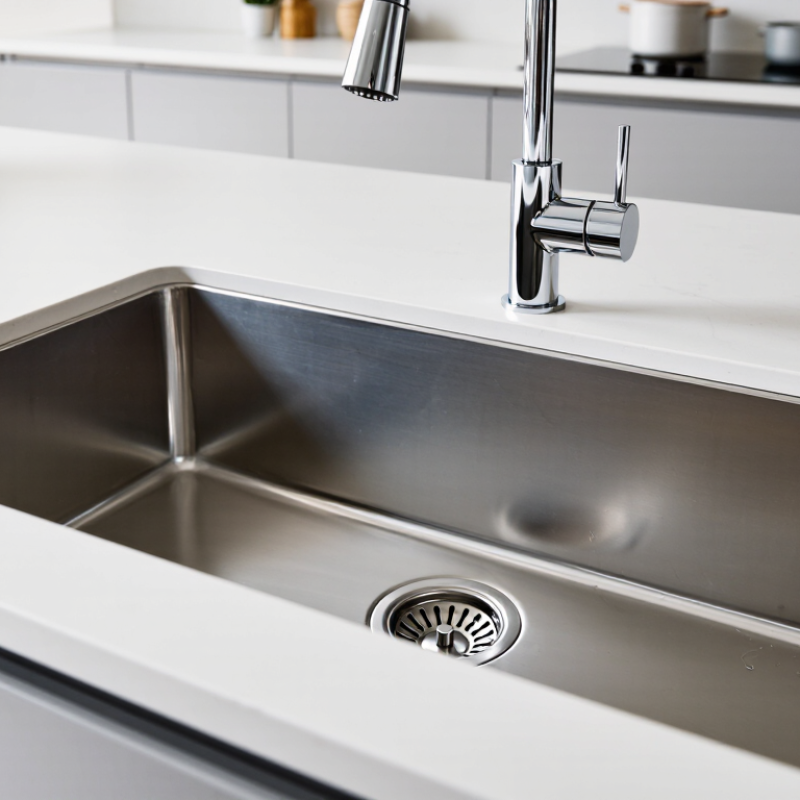
Undermount Kitchen Sinks: Design, Materials, and Installation Fundamentals
An undermount kitchen sink is fixed beneath the countertop, leaving a clean edge and an uninterrupted work surface. Its shape affects daily use: a single deep bowl fits baking trays, while divided bowls help separate washing and rinsing. Stainless steel is light, practical, and relatively forgiving of impacts, though thin steel may sound hollow. Granite-composite options feel solid and mute noise, but their weight calls for careful cabinet support. Small details matter. Check the bowl depth, corner radius, and drain position against your cookware and plumbing before choosing.
Installation depends on the countertop material and the sink’s weight. Stone and solid-surface tops are commonly suitable, but the fabricator should confirm the mounting method for the specific material. The rim must sit level beneath the cutout, with clips or a support frame holding the basin securely. Measure twice. A bead of compatible sealant helps block water at the joint; too much can squeeze into view and collect grime. Allow the sealant to cure as directed before using the sink. Check that the drain aligns without forcing the pipe, and run water while inspecting the cabinet below. Even experienced installers can miss a slight gap at the back. It happens. A final close inspection with a flashlight can reveal it before regular use.
China’s Sink Manufacturing Hubs and the 304 Steel Benchmark: 18% Chromium, 8% Nickel
China’s sink-making clusters benefit from a large stainless-steel supply chain, but “304” should mean more than a sales label. The World Stainless Association’s Stainless Steel in Figures 2024 reports 2023 global crude stainless-steel production of about 58.4 million tonnes, with China producing roughly 36.7 million tonnes. Scale supports sourcing options; it does not prove a particular sink’s composition.
The familiar 18/8 description is a useful shorthand, not a complete specification. ASTM A240/A240M lists Type 304 with 18–20% chromium and 8–10.5% nickel. Chromium helps form a protective surface layer, while nickel supports ductility and corrosion resistance. For an undermount sink, ask for a material test certificate tied to the sheet’s heat number, then compare its chemistry with the standard. A bright finish can look convincing. Paperwork matters. Still, certificates can be mismatched, and a quick visual check cannot confirm alloy grade.
Tips: Request the certificate before ordering. Match the heat number on the document to the supplier’s material record, and confirm sheet thickness separately. Thickness is not a substitute for grade. A careful buyer should also inspect welds, corners, and the underside; small defects often hide there.
Leading Chinese Manufacturers: Product Portfolios, Certifications, and Export Markets
Chinese undermount sink manufacturers typically offer stainless-steel, granite-composite, and fireclay models, with options for single or double bowls, drain grooves, and custom cutouts. Grand View Research estimated the global kitchen sink market at about US$3.4 billion in 2023, reflecting demand across residential renovation and new construction. That figure covers more than undermount products, so it should not be treated as a measure of one sink style alone. In factory evaluations, buyers should compare steel grade, sheet thickness, sound-dampening pads, weld finish, and the consistency of sink dimensions. Small details matter. A neat sample does not guarantee every production run will match.
Certifications depend on the product and destination market. ISO 9001 indicates a quality-management system, while NSF/ANSI 51 may be relevant to food-equipment materials; neither should be assumed from a factory’s general marketing claims. Ask for current certificates and confirm that their scope covers the exact model. For export-market checks, ITC Trade Map and UN Comtrade provide trade data under HS code 732410 for stainless-steel sinks, but classifications and reporting periods can differ. Chinese suppliers serve buyers in North America, Europe, Australia, and other regions, with requirements varying by importer and project. One honest limitation: public trade data rarely identifies undermount designs separately. Verify dimensions, packaging protection, and inspection records before approving a shipment.
Comparing Sink Specifications: 16-Gauge Steel at About 1.5 mm Thick
When comparing top undermount kitchen sink manufacturers in China, start with the steel thickness, not the product photo. A 16-gauge stainless steel sink is about 1.5 mm thick, though exact measurements can vary with production tolerances and forming. Ask whether the stated thickness refers to the flat bowl material or another measurement point. Small differences matter.
A thicker bowl can feel more solid when you set down a heavy pot. It may also resist dents better than a thinner sheet, but gauge alone does not determine performance. Stainless steel grade, bowl shape, weld quality, and installation support all play a role. Listen for a hollow ring, too. Sound-dampening pads can reduce noise, but their coverage and placement differ between models.
Check a sample or technical drawing when possible. Confirm the steel grade, finished dimensions, drain opening, and mounting details before comparing quotes. One detail is easy to overlook: a sink’s corners and pressed edges may not match the thickness of its broad, flat areas exactly. I would not judge quality from one number alone. A clear specification sheet helps, though it can still leave questions about real-world fit.
Supplier Evaluation: Quality Testing, Minimum Orders, Lead Times, and Warranties
When evaluating undermount kitchen sink manufacturers in China, look beyond a polished sample. Ask for material specifications, thickness measurements, and inspection records from recent production batches. Check that cutout dimensions match your cabinet drawings, and inspect the underside for smooth seams and secure sound-dampening pads. Samples can mislead. If possible, arrange a video inspection or use an independent inspector to review finished units before shipment.
Request clear answers about minimum order quantities and lead times. Confirm whether the quoted schedule includes sample approval, production, packing, and port delivery. A low MOQ may carry a higher unit cost, while a rushed schedule can leave too little time for checks. Discuss warranty coverage in writing: identify covered defects, the claim window, required evidence, and how replacement parts or products are handled. I have seen buyers focus heavily on price; that is understandable, but unclear claim procedures can become an expensive surprise.
Tips: Ask for one sample made with the intended finish and accessories. Photograph its measurements and packaging, then compare them with the first production batch. Keep the agreed specifications in a dated document. Small details matter. A written delivery estimate is useful, but it is not a guarantee; leave room for inspection and freight delays.