
What Are the Top Gramophone Record Players in 2026?
Choosing a Gramophone Record Player in 2026 means balancing sound, setup, and everyday convenience. The vinyl revival is measurable, not merely nostalgic. The Recording Industry Association of America’s 2024 Year-End Revenue Report recorded $1.4 billion in U.S. vinyl revenue, marking an eighteenth consecutive year of growth. That figure describes a market, not a guarantee that every player sounds excellent. A poorly aligned cartridge can still make a prized record sound thin or distorted.
Analog-audio journalist Michael Fremer has long emphasized the importance of careful setup and cartridge matching; this is a paraphrase of his recurring guidance, not a direct quotation. It matters when comparing this year’s leading models. Some offer built-in phono stages and automatic operation; others reward patient adjustment with more upgrade options. Think about where the player will sit, too. A wobbly shelf, nearby speakers, or a dusty stylus can undermine even an attractive design.
This guide compares leading Gramophone Record Player choices by sound, build, features, and value. It also considers the less glamorous details: speed stability, replaceable styli, and clear setup instructions. No single model suits every listener. Our comparisons aim to make the trade-offs visible, while acknowledging that room acoustics and personal preference can change the verdict. The best choice is the one you can set up correctly and enjoy using.
What Defines a Gramophone Record Player in 2026?
In 2026, “gramophone record player” can describe two different things. A traditional gramophone uses a needle and an acoustic horn to amplify sound mechanically. Many modern players use the word more loosely for an electric turntable, sometimes with a vintage-looking cabinet or horn. The label alone tells you little. Look underneath the styling.
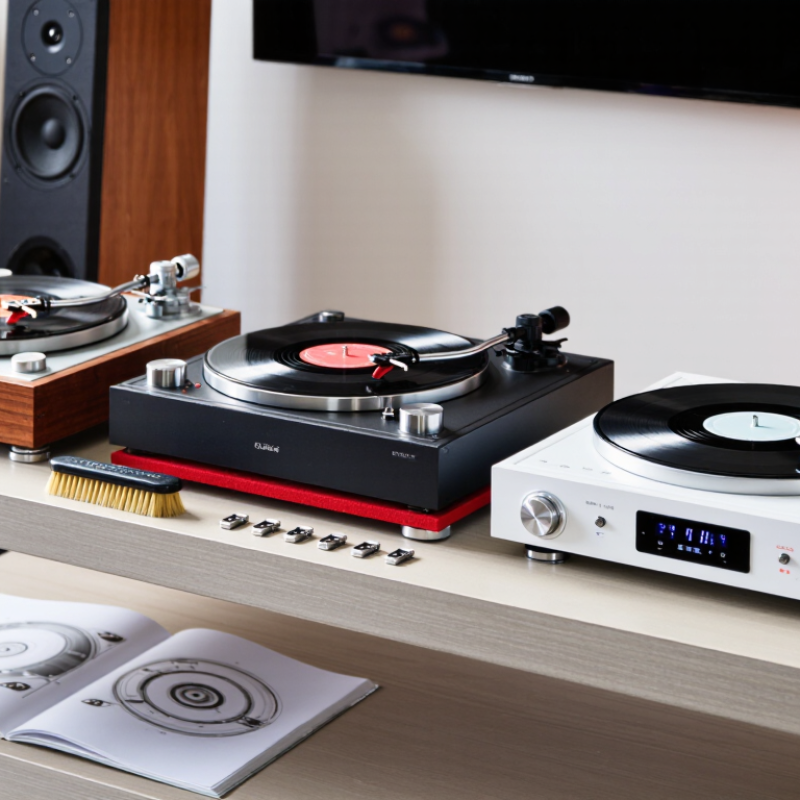
A practical definition starts with the parts that handle the record. A stable platter supports it, while a tonearm guides a stylus through the grooves. Speed settings should match the record; many players support 33⅓ and 45 rpm, while 78 rpm playback requires suitable equipment. Check whether the player has a built-in phono preamp, too. Without one, a compatible amplifier or external preamp may be needed. Small details matter: a wobbly platter, a worn stylus, or a dusty record can affect playback. Listen closely.
A gramophone-inspired design is not automatically a better record player. Nor does an acoustic horn necessarily offer the clearest sound by modern standards. The term remains a little untidy, and that can be confusing. For a useful comparison, focus on tracking, speed options, output connections, and replaceable parts. A bright cabinet may catch the eye, but it cannot correct poor setup.
How Gramophone Record Players Reproduce Sound
A Modern Gramophone Record Player reads sound from a spiral groove. As the stylus follows its tiny ridges, it moves a cantilever inside the cartridge. The cartridge converts that movement into an electrical signal. Small motion, real sound. For stereo records, the groove’s two walls carry different channel information.
The signal then passes through a phono preamplifier, which boosts its low level and applies playback equalization. An amplifier sends the corrected signal to speakers, where it becomes audible sound. The process is sensitive: dust, a worn stylus, or an uneven surface can add noise or distortion. RIAA’s 2024 Year-End Music Industry Revenue Report recorded US vinyl revenues of $1.4 billion, up 7% from 2023. That figure reflects strong interest in records, but sound quality still depends on setup and care.
Tips: Keep the stylus clean and the player level. Set tracking force to the manufacturer’s guidance. Keep speakers on a separate, stable surface when possible. One often-overlooked detail is room vibration; even a firm-looking shelf can transmit bass back into the stylus.
Key Criteria for Comparing Record Players
A useful comparison starts with the parts that shape playback, not cabinet style. The RIAA’s 2024 year-end report put U.S. vinyl revenue at about $1.4 billion, up 7% from 2023. That continued demand makes clear comparisons valuable, but popularity alone says nothing about sound quality.
Check speed stability, cartridge alignment, tonearm adjustability, and vibration control. A platter should hold 33⅓ and 45 rpm steadily; inconsistent speed can make sustained piano notes waver. The IEC 60098 standard covers measurement methods for analogue record players, giving reviewers a technical basis beyond listening impressions. Look for published wow-and-flutter and rumble measurements, then compare test conditions. Also confirm whether the player has a phono preamp, or whether your amplifier needs one. A detailed spec sheet helps, but it can still hide setup compromises. Small details matter.
Tips: Place the player on a firm, level surface. Check that the cartridge is aligned and the tracking force matches its maker’s guidance. If possible, listen to familiar records at a moderate volume; a bright demo track can flatter almost any system. Don’t overvalue extra features. A convenient automatic return is useful, but it cannot correct unstable speed or a poorly adjusted tonearm.
What Are the Top Gramophone Record Players in 2026? - Key Criteria for Comparing Record Players
| Player Type | Drive System | Operation | Typical Speeds | Phono Preamp | Upgrade Potential | Best Suited To | Main Trade-Off |
|---|---|---|---|---|---|---|---|
| Entry-Level Belt-Drive | A belt connects the motor to the platter, helping isolate some motor vibration. | Usually manual; the listener places and lifts the tonearm. | Commonly 33⅓ and 45 RPM. | Often built in on beginner models; check the individual specification. | Basic models may allow cartridge or stylus replacement, but tonearm and platter upgrades are limited. | New listeners seeking a straightforward home setup. | Build, adjustment options, and speed stability vary considerably by model. |
| Manual Direct-Drive | The motor drives the platter directly. | Typically manual; some models include pitch controls or other DJ-oriented features. | Often 33⅓ and 45 RPM; some models also support 78 RPM. | May be built in or require a separate phono preamp. | Cartridge and stylus changes are common; compatibility depends on the tonearm and headshell. | Listeners who value quick start-up, speed consistency, or hands-on control. | Features and sound performance depend on the motor, tonearm, and overall construction—not drive type alone. |
| Automatic Belt-Drive | A belt connects the motor to the platter. | Automatic mechanisms move the tonearm at the start and return it at the end; some models are semi-automatic. | Usually 33⅓ and 45 RPM. | Availability varies; some designs include a switchable preamp. | Cartridge replacement is often possible, though the automatic mechanism can limit adjustment choices. | Listeners who want convenient playback with less manual tonearm handling. | Mechanical complexity can make setup or servicing less simple than on a basic manual design. |
| Portable Suitcase-Style | Usually belt-drive. | Typically manual, with built-in speakers and a compact case. | Commonly 33⅓, 45, and sometimes 78 RPM; verify support before playing 78 RPM records. | Usually integrated into the player. | Generally limited; cartridge, stylus, and external speaker options vary. | Occasional listening, portability, and simple all-in-one use. | Small built-in speakers and limited adjustment options are not ideal for a high-fidelity stereo setup. |
| Higher-End Belt-Drive | A belt drives the platter; designs may focus on platter mass, motor isolation, and precise speed control. | Usually manual, with a separate tonearm and fewer automatic mechanisms. | Commonly 33⅓ and 45 RPM; 78 RPM support is model-dependent. | Often uses an external phono preamp, though some models include one. | Can offer broader cartridge, stylus, platter, and isolation options, subject to compatibility. | Experienced listeners building a separate-component stereo system. | Typically requires more setup and additional equipment, including suitable amplification and speakers. |
These are general product-category profiles, not specifications for individual models. Features, compatibility, and performance vary by player; confirm the manufacturer’s specifications before buying.
Leading Record Players by Category in 2026
In 2026, the leading record player depends on how and where you listen. For beginners, an all-in-one model is easy to set up: place it on a steady shelf, connect the speakers, and start playing. Convenience has trade-offs. Built-in speakers can sound thin, especially in a large room, and upgrades may be limited.
For detailed home listening, a belt-drive player with an adjustable counterweight and replaceable cartridge offers more room to grow. A built-in phono preamp also makes connection to ordinary powered speakers simpler. Keep it level. Even a slight tilt can affect tracking. Direct-drive models suit frequent cueing and beat matching; their stable speed and quick start matter more than decorative wood finishes. Portable players work for small spaces, but check stylus quality and speaker output before buying.
Demand remains substantial: the Recording Industry Association of America’s 2024 Year-End Revenue Report recorded $1.4 billion in U.S. vinyl revenue and 43.6 million records shipped. That measures records, not player sales, so it cannot identify a winning turntable category. Feel the difference. I would weigh repairable parts, speed accuracy, and vibration control over extra features; honestly, judging sound from specifications alone is imperfect.
How to Choose and Maintain a Record Player
Choosing a gramophone record player starts with your listening space, not a feature list. For a small room, built-in speakers may be convenient, but separate speakers usually offer more placement options. Check whether the player has a phono preamp; without one, you may need an external preamp to connect it to many amplifiers. Also confirm support for the record speeds you use, commonly 33⅓ and 45 rpm.
Pay attention to setup adjustments. A stable, level surface helps prevent skipping, while adjustable tracking force and anti-skate controls allow more precise tuning. These controls can feel fussy at first. Still, a clear manual and a replaceable stylus make ownership easier over time. If possible, listen at a moderate volume before deciding; loud showroom demonstrations can hide harshness or vibration.
Care is simple, but consistency matters. Keep records upright and away from direct sunlight, and use a soft record brush before playing. Clean the stylus gently from back to front with a suitable brush; side-to-side pressure can damage it. Replace the stylus according to its maker’s guidance, since wear depends on use and condition. Check belt-driven models for belt wear, and keep dust off the platter. It is easy to postpone these small tasks. That is often when playback starts to sound dull.