
Top 10 ENT Medical Equipment Suppliers Worldwide?
The global Ent Medical Equipment market is expanding as clinics invest in endoscopes, audiology systems, surgical microscopes, navigation platforms, and patient-monitoring tools. Fortune Business Insights estimates the ENT devices market could reach approximately USD 34 billion by 2032, supported by rising chronic ear disease, sinus disorders, and ageing populations. Grand View Research also identifies technology upgrades and outpatient procedures as major growth factors.
Yet market size does not prove supplier quality. Not enough.
This Top 10 ENT Medical Equipment Suppliers Worldwide overview examines manufacturers through clinical reliability, product breadth, regulatory transparency, service coverage, training, and long-term maintenance. The assessment considers systems used in real examination rooms, where image clarity, sterilisation workflow, spare-part access, and software stability can affect every appointment. The World Health Organization stresses that medical devices require appropriate selection, safe use, maintenance, and user training. That principle remains highly practical for ENT departments.
Dr. James C. Denneny, an otolaryngologist and former AAO-HNS president, has repeatedly promoted evidence-based, patient-centred care. His message can be expressed simply: “Technology should support clinical judgment, not replace it.” This idea guides the comparison. A premium tower may produce sharp images, yet poor training or delayed repairs can reduce its value. Supplier rankings also contain unavoidable judgement. Regional pricing, hospital budgets, and local regulatory requirements differ. Readers should verify current certifications, clinical evidence, warranty terms, and post-sale support before purchasing.
Defining the Global ENT Medical Equipment Supplier Market
Top 10 ENT Medical Equipment Suppliers Worldwide?
Defining the Global ENT Medical Equipment Supplier Market
The global ENT medical equipment supplier market includes manufacturers, distributors, and specialized service providers. It supports hospitals, clinics, surgical centers, and outpatient practices. Common products include endoscopes, audiometers, tympanometers, examination chairs, surgical microscopes, and powered instruments. Some suppliers also provide imaging systems, sterilization accessories, software, and staff training.
Market leadership is not measured by product volume alone. Reliable suppliers offer documented quality systems, traceable components, and responsive technical support. Procurement teams often examine calibration records, training materials, warranty terms, and local service coverage. A compact clinic may value easy maintenance, while a teaching hospital may require advanced imaging and simulation tools. These differences make global comparisons difficult.
Experience in clinical environments adds practical evidence. A device should perform consistently during a busy clinic, not only during a product demonstration. Clear controls, comfortable positioning, and quick cleaning can affect daily efficiency. Regulatory compliance remains essential, but requirements differ between regions. Supplier claims therefore need independent verification and current documentation. No ranking is perfectly neutral. Some market data remains uneven, especially in emerging healthcare systems. Even so, transparent evaluation can identify suppliers with dependable equipment, useful training, and long-term service capacity.
How the Top 10 ENT Equipment Suppliers Were Selected
The top 10 ENT equipment suppliers were selected through a practical, evidence-based review. The process examined clinical experience, product safety, technical performance, and service reliability. Market visibility alone was not enough.
Each supplier was assessed across several areas. These included diagnostic systems, endoscopes, surgical instruments, examination chairs, and hearing-related equipment. We reviewed published technical data, regulatory documentation, user training, warranty terms, and maintenance support. Independent clinical feedback also mattered. Real hospital use can reveal problems that brochures do not mention.
Field experience was given strong weight. Equipment should provide clear images, stable controls, comfortable handling, and consistent results during repeated procedures. Suppliers with responsive repair teams received higher consideration. Availability of replacement parts was also checked, especially for hospitals outside major cities. This detail is easy to overlook.
No ranking can represent every clinical environment perfectly. A device suited to a large teaching hospital may not fit a small outpatient clinic. Pricing, import conditions, and local technician access can change the practical value of any supplier. Our review therefore used balanced criteria rather than a single score. Some information was difficult to compare, and not every supplier publishes equal levels of evidence. That limitation deserves attention. The final selection reflects documented performance, professional credibility, user experience, and transparent support practices across international markets.
Profiles of the Leading Worldwide ENT Equipment Suppliers
The global ENT equipment market is expanding through demand for endoscopes, hearing systems, surgical microscopes, and image-guided tools. Fortune Business Insights reported that the market was valued at approximately USD 20 billion in 2023 and is projected to grow steadily through 2030. Grand View Research also identifies minimally invasive procedures and aging populations as major growth drivers. These figures explain supplier expansion, but they do not prove clinical quality.
Leading suppliers usually fall into several groups. Some specialize in rigid and flexible endoscopy, while others focus on audiology, operating-room visualization, or powered surgical instruments. Experienced hospitals assess image clarity, sterilization compatibility, repair response, and training support.
A low purchase price can become expensive when replacement parts arrive slowly. Service matters.
Supplier profiles should also examine regulatory documentation, cybersecurity controls, warranty terms, and evidence from clinical users. The World Health Organization emphasizes reliable access to safe, maintainable medical devices, especially where technical support is limited. In practice, procurement teams often compare five-year ownership costs rather than catalog prices.
The ranking is not absolute. A supplier may lead in endoscopy but perform poorly in rural maintenance.
I have also seen specifications look impressive until staff training was tested. Careful evaluation remains necessary.
Key ENT Equipment Categories and Clinical Applications
ENT departments rely on several equipment categories, each serving a clear clinical purpose. Endoscopes support nasal, throat, and laryngeal examinations with bright, detailed images. Flexible scopes improve access in narrow or curved anatomical areas. Rigid scopes often provide sharper views during sinus procedures. Examination chairs, light sources, and camera systems also affect workflow and diagnostic accuracy.
Audiology equipment measures hearing, middle-ear function, and speech responses. Pure-tone audiometers support hearing-threshold tests, while tympanometers assess eardrum movement and pressure. Surgical teams may require microscopes, suction units, surgical instruments, and powered systems for precise procedures. Sleep diagnostic devices help evaluate breathing interruptions and oxygen changes overnight. These categories serve different applications, so suppliers should offer suitable configurations rather than broad product lists.
Tips: Match each device to patient volume, room size, and staff training. Confirm image quality under actual lighting conditions. Check cleaning access, service response, calibration support, and documentation before purchase. A low price can become expensive when repairs delay care. Clinical teams should test controls while wearing gloves. Small handling problems matter. Supplier comparisons also need independent verification, because specifications may not reflect daily usability. Even experienced buyers can overlook software compatibility or replacement-part availability. Reviewers should record these weaknesses honestly, not hide them behind impressive technical language.
Top 10 ENT Medical Equipment Suppliers Worldwide? - Key ENT Equipment Categories and Clinical Applications
| No. | ENT Equipment Category | Representative Equipment | Primary Clinical Applications | Clinical Value | Common Compliance and Safety Requirements | Key Procurement Considerations |
|---|---|---|---|---|---|---|
| 1 | Diagnostic Audiology Systems | Pure-tone audiometers, speech audiometers, clinical headphones, insert earphones and sound-field speakers. | Hearing-threshold testing, speech discrimination assessment, occupational hearing screening and pre-operative hearing evaluation. | Establishes air- and bone-conduction thresholds and supports classification of conductive, sensorineural and mixed hearing loss. | IEC 60601-1, IEC 60645 series, ISO 389 series and applicable local medical-device regulations. | Consider calibration traceability, transducer compatibility, test-frequency range, masking capability, software reporting and local service support. |
| 2 | Tympanometry and Middle-Ear Analysis | Tympanometers, acoustic-reflex systems, wideband tympanometry devices and pneumatic otoscopy accessories. | Assessment of tympanic-membrane mobility, middle-ear pressure, ear-canal volume, acoustic reflexes and suspected otitis media. | Provides objective information about middle-ear function and helps identify effusion, perforation, Eustachian-tube dysfunction and ossicular abnormalities. | IEC 60601-1, IEC 60645-5 and relevant national calibration and electrical-safety requirements. | Evaluate probe-size options, automated screening protocols, pressure range, print or electronic reporting and disposable probe-tip availability. |
| 3 | Otoacoustic Emissions and ABR | Otoacoustic-emission screeners, auditory brainstem response systems, electrodes, insert earphones and infant-test accessories. | Newborn hearing screening, objective evaluation of cochlear function, auditory neuropathy investigation and pediatric diagnostic testing. | Supports early detection of hearing impairment when behavioral responses are unreliable or cannot be obtained. | IEC 60601-1, IEC 60645-6, applicable newborn-screening protocols and local data-protection requirements. | Check artifact rejection, test-speed options, age-specific protocols, electrode and probe compatibility, database functions and infection-control workflow. |
| 4 | Video Otoscopy and Ear Examination | Video otoscopes, rigid ear endoscopes, examination cameras, light sources and digital image-capture systems. | Examination of the ear canal and tympanic membrane, foreign-body assessment, cerumen management, documentation and patient education. | Provides magnified, shareable images that improve visualization, clinical documentation and communication with patients. | IEC 60601-1, applicable optical-device requirements, electrical safety and validated cleaning or disinfection procedures. | Review image resolution, illumination, field of view, ergonomic design, reusable or disposable components and compatibility with electronic records. |
| 5 | Flexible and Rigid Endoscopy | Flexible nasopharyngoscopes, rigid nasal endoscopes, endoscopic cameras, light sources and recording systems. | Evaluation of nasal obstruction, rhinitis, sinus disease, vocal-fold motion, swallowing-related findings and upper-airway lesions. | Enables direct visualization of the nasal cavity, nasopharynx, larynx and hypopharynx for diagnosis, treatment planning and follow-up. | IEC 60601-1, ISO 8600 series where applicable, reprocessing guidance and validated high-level disinfection or sterilization procedures. | Assess image quality, angulation, insertion-tube diameter, working-channel requirements, reprocessing compatibility and replacement-part supply. |
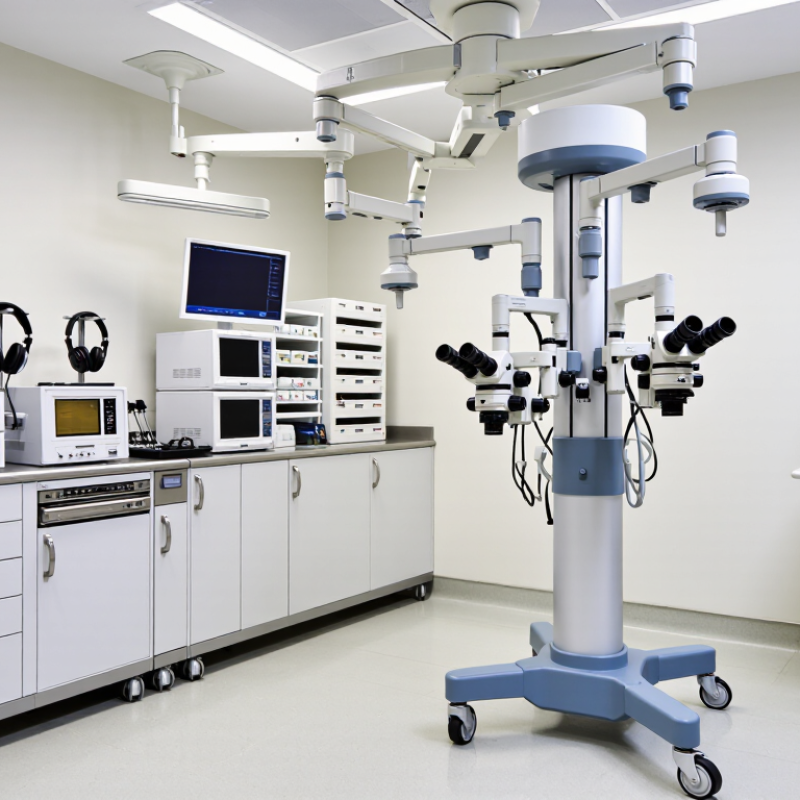
| 6 | Microsurgical and Examination Microscopes | ENT operating microscopes, binocular examination microscopes, coaxial illumination systems and surgical camera attachments. | Otologic microsurgery, tympanoplasty, stapes surgery, mastoid procedures, fine examination of the ear and selected laryngeal procedures. | Delivers magnification, depth perception and focused illumination for precise work in small anatomical spaces. | IEC 60601-1, IEC 60601-2-41 where applicable to surgical luminaires and relevant optical and electrical-safety requirements. | Compare magnification range, working distance, balancing, vibration control, illumination intensity, assistant viewing and integrated documentation. |
| 7 | ENT Treatment Units | Modular treatment chairs, examination lights, suction systems, compressed-air systems, instrument trays and integrated control panels. | Routine ear, nose and throat examinations, minor procedures, foreign-body removal, nasal care and outpatient treatment. | Integrates essential instruments and utilities in one workstation, improving clinical workflow, ergonomics and room utilization. | IEC 60601-1, IEC 60601-1-2 for electromagnetic compatibility and applicable national installation and hygiene requirements. | Consider chair load capacity, configuration flexibility, suction performance, cleanability, utility connections, staff ergonomics and preventive maintenance. |
| 8 | ENT Surgical Instruments and Energy Devices | Microdebriders, electrosurgical systems, bipolar instruments, radiofrequency devices, drills and specialized hand instruments. | Functional endoscopic sinus surgery, tonsil and adenoid procedures, turbinate reduction, soft-tissue surgery and selected otologic operations. | Supports controlled tissue cutting, coagulation, ablation and bone work during minimally invasive or open ENT procedures. | IEC 60601-1, IEC 60601-2-2 for high-frequency surgical equipment where applicable, ISO 13485 manufacturing controls and reprocessing validation. | Evaluate handpiece control, thermal spread, irrigation and suction integration, single-use versus reusable costs, sterilization limits and training needs. |
| 9 | Suction, Irrigation and Nebulization Systems | Medical suction units, irrigation pumps, nasal irrigation systems, nebulizers and associated tubing or collection containers. | Airway secretion management, nasal and sinus care, office procedures, postoperative treatment and delivery of prescribed inhaled medication. | Helps maintain a clear field, remove secretions and deliver fluids or aerosols according to the clinical procedure. | IEC 60601-1, ISO 10079 series for medical suction equipment where applicable and local infection-control requirements. | Check vacuum range, flow stability, noise level, bacterial filtration, overflow protection, consumable availability and cleaning requirements. |
| 10 | Sleep, Balance and Vestibular Testing | Vestibular test systems, video head-impulse systems, videonystagmography equipment, rotary chairs and polysomnography accessories. | Evaluation of vertigo, nystagmus, vestibular hypofunction, balance disorders, obstructive sleep apnea and related sleep disturbances. | Provides objective measurements of eye movements, vestibulo-ocular reflexes, postural responses and sleep-related physiological signals. | IEC 60601-1, IEC 60601-1-2, applicable physiological-monitoring requirements and local cybersecurity and data-protection rules. | Review sensor accuracy, motion and eye-tracking quality, patient safety features, software analytics, interoperability and clinician training. |
Factors for Comparing ENT Medical Equipment Suppliers
Comparing ENT medical equipment suppliers requires more than reviewing catalog size. In clinical settings, image clarity, ergonomic controls, sterilization compatibility, and repair access affect daily workflow. Ask for technical specifications, validated performance data, and feedback from comparable hospitals. A reliable supplier should explain light output, camera resolution, working-channel dimensions, and service intervals clearly. Vague answers are warning signs. Check whether documentation supports regional requirements, traceability, training, and maintenance records. Good equipment is only useful when staff can operate it consistently.
Total cost deserves careful inspection. Compare the purchase price, accessories, consumables, software, installation, calibration, shipping, and possible downtime. Request a written warranty with response times and replacement procedures. Test customer support before signing. Send practical questions and assess the clarity of each reply. Experienced suppliers can discuss failure patterns without promising perfection. That matters. Request a demonstration under realistic conditions, including dim rooms, moving patients, and repeated disinfection cycles. A polished demonstration may hide everyday weaknesses. My comparison may still be imperfect, so I record assumptions and invite an independent clinician to challenge them.
Tips: Use one scoring sheet for every supplier. Check references from similar ENT departments. Ask who repairs the equipment locally. Record hidden costs. Reconsider any supplier that avoids measurable answers.