
China Top 10 Beauty Products Suppliers for Global Buyers
China’s beauty manufacturing sector has become an important sourcing base for global buyers. The opportunity is substantial. McKinsey’s 2023 beauty industry report projects the global market will approach $580 billion by 2027, with annual growth near 6%. China contributes both manufacturing scale and fast product development.
The domestic market also shows strong commercial depth. According to China’s National Bureau of Statistics, cosmetics retail sales reached approximately RMB 414.2 billion in 2023. This growth supports suppliers across skincare, makeup, haircare, personal care, packaging, and OEM/ODM services. However, production scale alone does not prove supplier reliability. Buyers should examine factory audits, ISO 22716 or equivalent practices, ingredient traceability, batch records, stability testing, and export documentation. These details matter when Beauty Products enter different regulatory markets.
This guide reviews ten China-based suppliers for international purchasing teams. It considers manufacturing capability, customization experience, quality systems, communication, minimum order quantities, and evidence of overseas service. Public information can change. Rankings are not absolute. A supplier with excellent samples may still struggle with delivery consistency. Another may offer lower prices but weaker documentation. Buyers should request current certificates, test reports, product specifications, and reference orders before making decisions. Independent verification remains essential, especially for products sold in the European Union, North America, or other regulated markets. The best supplier is not always the largest. It is the one that matches your formula, compliance needs, budget, and timeline.
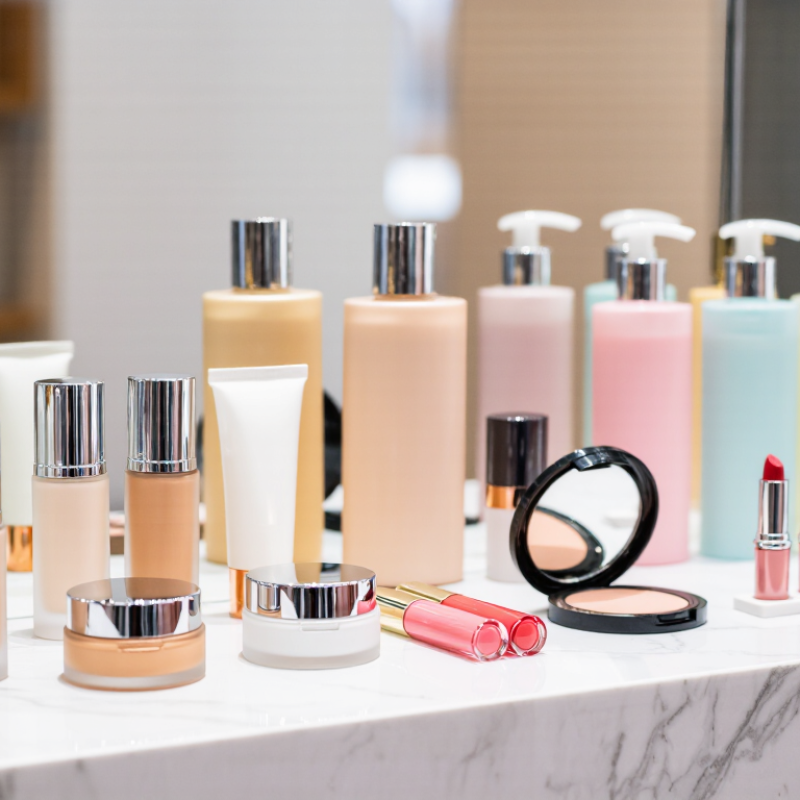
China’s Beauty Supply Landscape: RMB414.2B in 2023 Retail Sales (NBS)
China’s beauty market reached RMB414.2 billion in retail sales in 2023, according to the National Bureau of Statistics (NBS). This figure shows scale, not automatic export readiness.
Retail demand covers skincare, color cosmetics, haircare, personal care, tools, and packaging services. For global buyers, the opportunity sits between factory capability and market-specific compliance.
That gap matters.
When assessing China’s top beauty product suppliers, buyers should examine product records, manufacturing controls, and testing documentation. A reliable supplier can explain ingredient sourcing, batch tracking, shelf-life testing, and complaint handling.
Ask for samples from the intended production line, not only showroom samples. Review packaging accuracy, seal quality, texture consistency, and labeling space before negotiating volume.
Small defects become expensive after thousands of units. It happens.
The RMB414.2 billion domestic market also gives suppliers valuable experience with fast product cycles and varied consumer preferences. Yet domestic popularity does not prove suitability for every overseas market.
Import rules, claims, languages, allergens, and packaging requirements differ by destination. Buyers should verify current rules with qualified local professionals and keep written approval records.
Factory audits, video calls, and third-party testing can improve confidence, but none replaces clear contracts and inspection plans.
I would not treat a polished catalogue as evidence of reliability. That is an easy mistake.
A stronger shortlist balances capacity, transparent communication, documented quality systems, and realistic lead times.
How the Top 10 Suppliers Are Ranked by Quality, MOQ, Capacity, and Cost
China Top 10 Beauty Products Suppliers for Global Buyers
How the Top 10 Suppliers Are Ranked by Quality, MOQ, Capacity, and Cost
A reliable ranking should begin with production evidence, not attractive catalog photos. We review samples, factory records, ingredient traceability, packaging accuracy, and batch-to-batch consistency. Independent testing documents also matter, especially for products applied directly to skin or hair. Samples reveal gaps. A polished sample may not represent regular production.
Quality receives the strongest weight, followed by capacity, MOQ, and total cost. MOQ is checked against realistic launch volumes, because a low minimum order can still create higher unit costs. Capacity is assessed through equipment, workforce, lead times, and peak-season performance. Suppliers that explain delays honestly earn more confidence than those promising impossible delivery dates. Practical experience shows that clear communication often prevents costly revisions.
Cost means more than the factory quotation. The assessment includes packaging, sampling, inspection, shipping preparation, and possible rework. Numbers can mislead. A cheaper offer may use thinner containers or provide weaker documentation. The top ten should therefore reflect balanced performance, not one impressive figure. Ranking data also needs regular review, since equipment, materials, and export experience can change within a year. Some judgments remain imperfect when production information is private, so buyers should confirm current records before signing an order.
China Top 10 Beauty Products Suppliers for Global Buyers - How the Top 10 Suppliers Are Ranked by Quality, MOQ, Capacity, and Cost
| Rank | Anonymous Supplier Profile | Quality Score (100) |
Typical MOQ (Units/SKU) |
Estimated Capacity (Units/Month) |
Benchmark Cost (USD/Unit) |
Typical Lead Time | Quality & Compliance Indicators | Best Fit for Global Buyers | Overall Score (100) |
|---|---|---|---|---|---|---|---|---|---|
| 1 | Profile A — Integrated Premium OEM/ODM Manufacturer | 96 | 3,000–5,000 | 1,000,000–2,000,000 | $2.80–$6.50 | 45–70 days | ISO 22716 GMP systems In-house laboratory Stability testing | Regulated markets, premium skincare, complex formulations, and multi-country launches | 91.4 |
| 2 | Profile B — Large-Scale Mass-Market Factory | 92 | 5,000–10,000 | 2,000,000–5,000,000 | $1.20–$3.80 | 35–60 days | ISO 9001 GMP controls Automated filling Batch traceability | High-volume private-label skincare, body care, hair care, and retail programs | 89.8 |
| 3 | Profile C — Export-Oriented Skincare Specialist | 94 | 2,000–5,000 | 500,000–1,200,000 | $2.00–$5.20 | 40–65 days | ISO 22716 Safety assessment Microbiology testing Export documentation | Serums, creams, cleansers, sunscreens, and buyers requiring export-ready documentation | 88.9 |
| 4 | Profile D — Flexible Mid-Sized Formulation Partner | 89 | 1,000–3,000 | 250,000–700,000 | $1.80–$4.80 | 35–55 days | GMP-aligned production Custom formulation Pilot batches QC inspection | Growing brands seeking moderate MOQs, product customization, and manageable development costs | 86.7 |
| 5 | Profile E — Color Cosmetics and Makeup Specialist | 90 | 3,000–8,000 | 600,000–1,500,000 | $1.30–$4.20 | 40–70 days | Shade matching Pigment testing Packaging assembly Batch QC | Foundations, lip products, eye makeup, compact products, and seasonal collections | 85.9 |
| 6 | Profile F — Natural and Botanical Product Manufacturer | 88 | 2,000–5,000 | 300,000–800,000 | $2.20–$5.80 | 45–75 days | Ingredient traceability Preservative testing Allergen review Stability testing | Botanical skincare, clean-beauty concepts, essential-oil products, and naturally positioned ranges | 84.6 |
| 7 | Profile G — Packaging-Integrated Beauty Supplier | 84 | 5,000–10,000 | 700,000–1,800,000 | $1.50–$4.50 | 40–65 days | Bottle and jar sourcing Decoration services Assembly line Packaging inspection | Buyers prioritizing coordinated packaging, decoration, filling, labeling, and final assembly | 82.8 |
| 8 | Profile H — Fast-Turnaround Private-Label Supplier | 82 | 500–2,000 | 150,000–450,000 | $1.60–$4.00 | 25–45 days | Ready-made formulas Standard packaging Basic QC release Short sampling cycle | Startups, e-commerce sellers, test launches, promotional products, and small seasonal orders | 81.5 |
| 9 | Profile I — Professional Hair and Body Care Manufacturer | 86 | 3,000–8,000 | 400,000–1,000,000 | $1.40–$4.60 | 35–60 days | Viscosity control Microbial testing Large-volume mixing Salon-size packaging | Shampoo, conditioner, masks, shower products, hand care, and professional-use formats | 80.9 |
| 10 | Profile J — Entry-Level OEM Supplier for Cost-Sensitive Orders | 78 | 300–1,000 | 80,000–250,000 | $0.80–$2.80 | 25–50 days | Standard formulas Basic production QC Low-cost packaging Limited customization | Budget launches, promotional sets, simple personal-care products, and market testing | 77.6 |
Benchmark methodology: Rankings use a weighted model of quality and compliance (35%), MOQ flexibility (20%), production capacity (20%), indicative ex-works cost (15%), and lead-time reliability (10%). Cost ranges are typical market benchmarks for a standard 30 ml skincare product with basic packaging at a commercial order quantity; actual quotations vary by formula, ingredients, packaging, testing, certification, order volume, and destination-market requirements. Supplier capabilities and certifications should be independently verified before purchase.
Top 10 China Beauty Suppliers: OEM, ODM, Private Label, and Wholesale Models
Global buyers often compare China’s top ten beauty suppliers by business model, not catalog size. OEM suppliers manufacture a buyer’s approved formula and packaging. ODM suppliers offer tested base formulas for adjustments in texture, fragrance, color, or active levels. Private label programs simplify launches by combining existing products with custom labels. Wholesale suppliers provide ready-made goods with limited development work. Each route affects MOQ, lead time, pricing, and control. Each route matters. A factory visit, video audit, and recent quality records reveal more than polished photos.
Tips: Request samples from two production batches. Check texture, scent, color, fill weight, and leakage after transport. Ask for ingredient lists, stability data, microbial testing, packaging specifications, and batch traceability. Confirm that product claims match available evidence and destination-market requirements. Put approval samples, defect limits, payment stages, inspection rights, and delivery dates in writing. I would not trust the cheapest quote automatically. Low pricing can hide weak pumps, rushed filling, or unclear testing responsibilities.
Experienced buyers also examine communication. Can the supplier explain a failed sample without excuses? Can it repeat the same result at scale? Private label looks easy, yet artwork errors can delay a launch. OEM offers control, but formulation ownership requires careful contracts. ODM saves time, though the base formula may feel less distinctive. Wholesale is practical for testing demand, but stock freshness and storage conditions matter. No sourcing process is perfect. Review these trade-offs before selecting suppliers from the top ten.
China Beauty Suppliers: Business Model Comparison
A practical comparison of the four supplier models commonly used by global beauty buyers, rated across order flexibility, customization, and buyer control.
OEM and ODM models provide the strongest customization potential, while wholesale offers the fastest route to market. Private label combines ready-made formulas with customized packaging and branding.
Compliance Checklist: NMPA Registration, INCI Labels, GMP, and ISO 22716
When comparing China’s top beauty product suppliers, global buyers should treat compliance as a purchasing requirement, not a marketing claim. For products entering China, confirm whether NMPA registration or ordinary cosmetic filing applies. Special cosmetics usually require registration before sale. Keep the approval or filing record, product formula, safety assessment, and testing documents together. Details matter.
Check every label against the final formula. Ingredients should use accurate INCI names, while net content, responsible-party details, usage instructions, warnings, batch information, and shelf-life markings must be consistent. A minor spelling difference can delay customs clearance or create consumer-safety concerns. Ask suppliers for label artwork and translated files before production. Do not rely on screenshots alone.
GMP procedures should cover raw-material approval, weighing, sanitation, filling, quarantine, and release checks. ISO 22716 certification can support this review, but its certificate does not replace an onsite audit or batch records. Request recent audit reports, calibration logs, deviation records, and certificates of analysis. Keep records. A polished document may hide weak daily controls. The checklist is helpful, but not foolproof. Suppliers should also explain how they investigate contamination risks, formula changes, complaints, and recalls. If an answer sounds vague, pause the purchase and request evidence.
Global Buyer Guide: Certifications, Lead Times, Export Data, and Risk Control
Global buyers should evaluate beauty product suppliers through evidence, not attractive catalogs. Euromonitor’s 2024 research estimated global beauty and personal care retail sales at about US$590 billion. This scale increases sourcing opportunities, but also creates crowded and uneven supplier markets. Request ISO 22716 records, product-specific certificates, factory audit reports, and recent batch test results. Check whether each document covers the actual production site and product category. A certificate is not proof of every batch.
Lead times need written milestones. For standard items, 30–45 days may be realistic; customized packaging can add 15–30 days. Confirm artwork approval, raw material booking, inspection, and port delivery separately. I also review UN Comtrade data under HS 3304 and HS 3305 to compare export values, destination markets, and supplier-country concentration. Export growth can indicate capacity, but it cannot prove consistent quality. That part is often overlooked.
Risk control works better with small purchase orders, third-party inspections, retained samples, and payment stages tied to evidence. Ask for production photos with dates, but do not treat photos as verification. I prefer a pilot shipment before annual contracts. It costs more initially. Still, it can expose weak filling accuracy, damaged cartons, or missing labels early. Buyers should also check destination-country ingredient rules and stability data before shipment. My own review process is imperfect; documents can expire, translations can be poor, and supplier answers may change. Rechecking remains necessary.
Related Posts
-
Strategies for Sourcing Innovative Beauty Products Globally
-
The Ultimate Guide to Selecting the Best Beauty and Personal Care Products for Your Routine
-
Mastering Your Skincare Routine: A Beginner’s Guide to Beauty and Personal Care Essentials
-

Top 10 Beauty Care Tips for Glowing Skin Secrets?
-
Navigating Global Standards in Beauty Care: Challenges and Innovations for Today’s Suppliers
-
Why Are Skin Beauty Products Essential for Healthy Skin?