
Top 10 Atomized Metal Powder Suppliers Worldwide
Atomized Metal Powder has become essential to additive manufacturing, metal injection molding, thermal spraying, and advanced powder metallurgy. Its quality affects flowability, packing density, sintering behavior, and final part performance. A narrow particle-size distribution may improve consistency, while irregular particles can sometimes support better mechanical interlocking. The details matter.
Dr. Randall M. German, a leading powder metallurgy researcher, has said, “Powder characteristics govern process performance.” This principle guides our review of the Top 10 Atomized Metal Powder Suppliers Worldwide. The evaluation considers alloy range, atomization technology, oxygen control, particle-size options, certification practices, production capacity, and customer support. Suppliers serving aerospace may prioritize vacuum atomization and strict traceability. Automotive buyers may focus more on stable volume production and competitive pricing. Laboratory users often need small batches with unusually precise specifications.
Real purchasing decisions are rarely simple. A supplier may offer excellent titanium powder but limited nickel alloys. Another may provide reliable documentation while lacking regional inventory. Some published specifications also require closer verification. Supplier rankings can change as facilities expand, certifications expire, or delivery performance shifts. That weakness should be acknowledged.
This guide offers a practical starting point, not an absolute verdict. Buyers should request current test reports, review safety data, confirm applicable standards, and test samples under real processing conditions. A bright particle-size chart is not enough. The powder must perform inside your equipment, under your parameters, and across repeated production cycles.
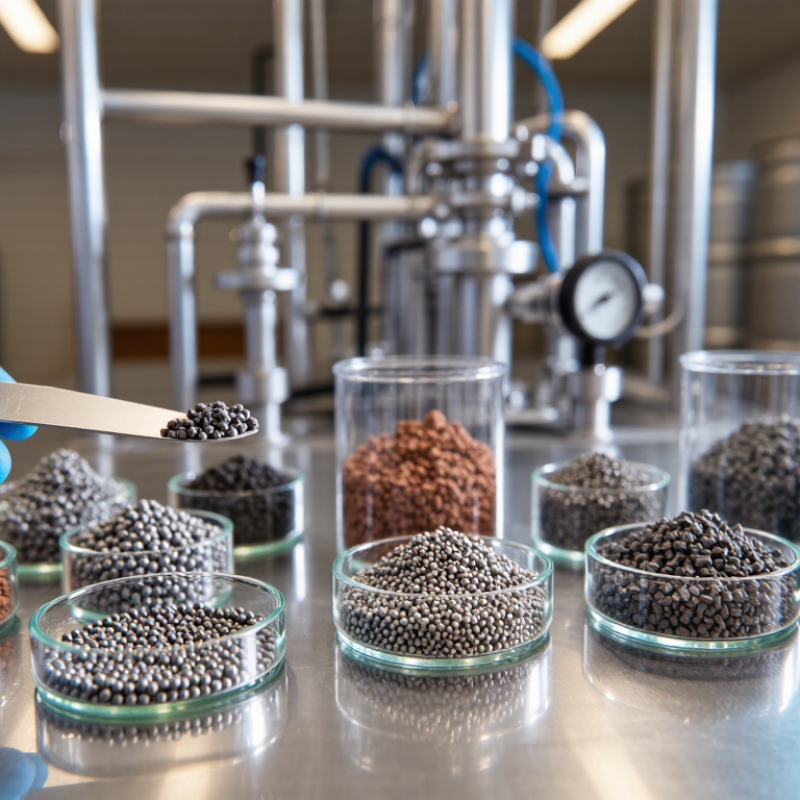
What Atomized Metal Powders Are and Why They Matter
Atomized metal powders are tiny particles formed by breaking molten metal into droplets. High-pressure gas or water separates the stream during production. As droplets cool, they become powder with controlled sizes and shapes. Particle size, shape, oxygen content, and surface texture influence performance. This process sounds precise, but no batch is perfectly identical. That small variation deserves attention.
These powders matter in additive manufacturing, thermal spraying, and powder metallurgy. Spherical particles usually flow smoothly through automated equipment. Consistent chemistry can improve strength, density, and repeatability. However, finer is not always better. Excessive fines may increase oxidation, dust, and handling difficulty. A dependable supplier should provide batch certificates, particle-size data, chemical analysis, and traceability. Independent testing can confirm those claims. Real production experience matters, though laboratory data alone cannot predict every manufacturing problem.
Tips: Ask how the powder was atomized and stored. Check moisture controls, packaging, and retest policies. Compare flow rate, apparent density, and oxygen levels across several batches. A sample may perform well once, then reveal weaknesses during extended production. Evaluate it under your actual machine settings, not only ideal laboratory conditions. Document every result.
Key Criteria for Evaluating Global Metal Powder Suppliers
Choosing among the top atomized metal powder suppliers requires more than comparing prices. Start with powder consistency. Review particle size distribution, morphology, flowability, apparent density, and oxygen content. These properties affect packing, melting behavior, and final part strength.
Ask how the supplier controls atomization conditions and batch variation. Reliable producers should provide recent certificates of analysis, lot traceability, and documented testing methods. Check whether their laboratory follows recognized quality systems. Confirm production capacity, lead times, packaging controls, and storage conditions. A strong supplier can also explain how powder performance changes across printing or sintering parameters. That practical knowledge matters.
Tips: Request a representative sample before signing a large contract. Test it using your own equipment. Compare flow, spreading, and finished-part density. Keep questions specific. Vague answers deserve attention.
Technical support is another important criterion. Experienced engineers should discuss application limits without promising unrealistic results. Evaluate communication speed, corrective-action procedures, and willingness to investigate failed batches. Sustainability and workplace safety records also reveal operational maturity. However, public documents may not show every weakness. Independent verification remains useful. No supplier is perfect, and buyers can misread polished specifications. I have found that consistent evidence usually matters more than impressive claims. Recheck the data when the alloy, particle size, or production route changes.
Top 10 Atomized Metal Powder Suppliers Worldwide - Key Criteria for Evaluating Global Metal Powder Suppliers
| Supplier Profile | Primary Atomization Route | Typical Metal Portfolio | Common Particle Size Distribution | Typical Sphericity | Typical Oxygen Level | Relevant Quality Systems | Production Scale | Key Strength | Evaluation Rating |
|---|---|---|---|---|---|---|---|---|---|
| Profile 01 | Gas atomization using inert argon or nitrogen | Stainless steel, tool steel, nickel alloys, cobalt-chromium alloys | 15–45 μm for powder-bed fusion; 45–105 μm for directed-energy processes | ≥ 0.95 circularity in qualified lots | Typically 0.02–0.10 wt%, depending on alloy and handling | ISO 9001; aerospace and additive-manufacturing quality controls commonly available | Commercial-scale production with batch traceability | Broad alloy coverage and consistent flowability | ★★★★★ |
| Profile 02 | Vacuum inert-gas atomization | Titanium, titanium alloys, nickel superalloys, reactive metals | 15–53 μm and 53–150 μm fractions | Typically ≥ 0.96 for additive-manufacturing grades | Often below 0.15 wt% for titanium grades; specification-dependent | ISO 9001; aerospace material traceability and chemical-analysis documentation | Medium-to-large industrial capacity | Low-contamination processing for reactive alloys | ★★★★★ |
| Profile 03 | Water atomization with controlled drying and classification | Iron, low-alloy steel, stainless steel, copper-based alloys | 20–180 μm, with broad press-and-sinter grades | Lower than gas-atomized powder; morphology is generally irregular to partially rounded | Commonly 0.10–0.60 wt%, depending on alloy and post-processing | ISO 9001; powder-metallurgy laboratory testing and lot certification | High-volume production | Cost efficiency for powder metallurgy and conventional pressing | ★★★★☆ |
| Profile 04 | Plasma atomization or plasma spheroidization | Titanium, nickel, tantalum, niobium, and other high-value alloys | 15–63 μm for powder-bed fusion; custom narrow cuts available | Typically ≥ 0.97 with low satellite-particle content | Usually controlled below 0.15 wt% for qualified reactive-alloy grades | ISO 9001; advanced particle characterization and additive-manufacturing qualification | Specialty and medium-scale production | High sphericity and excellent packing behavior | ★★★★★ |
| Profile 05 | Electrode induction-melting gas atomization | Nickel-based superalloys, cobalt alloys, stainless steels | 20–63 μm and 63–125 μm fractions | Typically ≥ 0.95 | Commonly 0.02–0.12 wt% for inert-processed grades | ISO 9001; full melt-to-powder traceability and controlled-atmosphere processing | Medium industrial capacity | Strong control of chemistry and reduced refractory contamination | ★★★★★ |
| Profile 06 | Gas atomization with air or inert-gas processing options | Aluminum alloys, copper alloys, bronze, brass, stainless steel | 20–63 μm for additive manufacturing; 45–150 μm for thermal spray | Typically 0.90–0.97, alloy dependent | Often 0.05–0.25 wt%; aluminum requires particularly strict handling controls | ISO 9001; particle-size, flow-rate, apparent-density, and chemical testing | Commercial-scale production | Flexible material selection and application-specific sizing | ★★★★☆ |
| Profile 07 | Rotating-electrode or centrifugal atomization | Titanium, nickel, cobalt, stainless steel, specialty reactive alloys | 45–150 μm, with selected finer fractions | Typically ≥ 0.94 | Generally 0.03–0.15 wt% when processed under vacuum or inert gas | ISO 9001; vacuum melting, chemical analysis, and powder morphology inspection | Specialty medium-scale production | Clean powder with controlled chemistry and limited crucible interaction | ★★★★☆ |
| Profile 08 | Water atomization followed by annealing and classification | Iron, stainless steel, nickel-iron, copper-iron alloys | 20–250 μm for structural parts, friction materials, and soft magnets | Irregular morphology; optimized for compressibility rather than high sphericity | Typically 0.15–0.80 wt%, depending on reduction and annealing conditions | ISO 9001; powder-metallurgy standards for density, compressibility, and dimensional control | High-volume production | High throughput and strong compressibility for press-and-sinter parts | ★★★★☆ |
| Profile 09 | Gas atomization with proprietary alloy development capability | Maraging steel, tool steel, copper alloys, nickel alloys | 15–53 μm for laser powder-bed fusion; 53–106 μm for larger-bead systems | Typically ≥ 0.95 | Often 0.03–0.15 wt% for additive-manufacturing specifications | ISO 9001; application qualification, powder reuse studies, and batch-level certificates | Small-to-medium development and commercial capacity | Rapid customization and application-specific powder development | ★★★★☆ |
| Profile 10 | Gas atomization with extensive sieving and air-classification capability | Stainless steel, nickel alloys, aluminum alloys, cobalt alloys | 10–45 μm, 15–63 μm, and 45–105 μm product cuts | Typically ≥ 0.94 with controlled satellite levels | Usually 0.03–0.20 wt%, depending on alloy family and packaging conditions | ISO 9001; statistical process control, particle-size verification, and retained samples | Medium-to-large production capacity | Reliable particle-size control and broad distribution support | ★★★★☆ |
Note: The figures shown are representative industry ranges for evaluating atomized metal powder suppliers. Actual values vary by alloy chemistry, atomization conditions, particle-size fraction, testing method, packaging, and customer specification. Supplier qualification should be based on current batch certificates, independent laboratory results, and application-specific validation.
Production Technologies and Quality Standards Used by Leading Suppliers
Top 10 Atomized Metal Powder Suppliers Worldwide
Leading atomized metal powder suppliers now combine gas, water, and plasma atomization. Gas atomization uses controlled jets to break molten metal into spherical particles. Plasma atomization produces highly spherical powders for demanding additive manufacturing applications. Water atomization costs less, but often creates irregular particles and higher oxygen levels. Particle shape matters. It affects powder flow, packing density, and laser stability.
The 2024 Wohlers Report valued the global additive manufacturing industry at 20.035 billion US dollars in 2023. This growth increases pressure on suppliers to deliver repeatable powder batches. Quality teams commonly test particle-size distribution through ISO 13320 laser diffraction or ISO 4497 sieving. They also measure flowability, apparent density, tap density, and chemical composition. ASTM B213 and ASTM B212 remain useful references for flow and density testing. Oxygen, nitrogen, and hydrogen levels require careful control.
Small differences can create large defects. A wider particle range may improve packing, yet it can disturb recoater movement. Suppliers therefore use microscopy, sieve analysis, and batch traceability records. Many production systems follow ISO 9001, while powder specifications may reference ISO/ASTM 52907 and ASTM F3049. However, standards do not eliminate every risk. Moisture exposure, poor storage, or incomplete sampling can still compromise performance. That weakness deserves more attention. Buyers should request test reports, reuse guidance, and clear acceptance limits before qualification.
Top 10 Atomized Metal Powder Suppliers Worldwide: Production Technologies and Quality Standards
Industry benchmark showing the number of leading suppliers, grouped anonymously, that commonly use each technology or quality practice.
Gas atomization is the most widely used production route for high-performance metal powders, while water, plasma, vacuum, and centrifugal atomization serve specific alloy and application requirements. Quality control typically combines ISO-based management systems, ASTM or ISO powder specifications, particle-size testing, and full lot traceability.
Profiles of the Top 10 Atomized Metal Powder Suppliers Worldwide
Top 10 Atomized Metal Powder Suppliers Worldwide
The European gas-atomization supplier serves aerospace and medical manufacturers with tight particle-size control and detailed lot records. Its engineers regularly adjust gas pressure, improving spherical powder shape. The North American water-atomization supplier focuses on stainless steel and tool steel grades. It offers larger production volumes, although surface oxygen can require closer monitoring. The East Asian plasma-atomization producer specializes in reactive and high-value alloys. Its powder shows excellent flowability, but minimum order quantities may challenge smaller buyers. The South Asian supplier combines gas atomization with custom screening. It provides flexible trial batches and practical technical support.
A Japanese precision supplier emphasizes narrow size distributions for additive manufacturing. Its inspection reports often include morphology images and apparent density. The Nordic producer uses energy-efficient atomization systems for nickel and iron alloys. Buyers should still verify capacity during peak demand. The Middle Eastern supplier serves regional casting and thermal-spray markets. Its strength is responsive logistics, though alloy availability can vary by season.
The Australian supplier develops titanium and aluminum powders for advanced manufacturing. Traceability is strong from melting through packaging. The Central European supplier offers recycled feedstock programs and application testing. Results look promising, but sustainability claims need independent evidence. The South American supplier provides cost-focused copper and steel powders for industrial users. Lead times are competitive, yet technical documentation may be less consistent. No supplier wins every application. Powder performance depends on atomization, storage, handling, and machine settings. In practice, buyers should compare sample data, oxygen levels, flow rates, and customer references before approving a long-term source.
Applications, Markets, and Regional Strengths of Major Suppliers
Top 10 Atomized Metal Powder Suppliers Worldwide
The leading atomized metal powder suppliers serve different industrial priorities. East Asian producers often offer broad capacity for stainless steel, aluminum, copper, and nickel powders. Their strengths include efficient production and competitive pricing. These powders support automotive parts, electronics, metal injection molding, and general engineering.
European suppliers are widely recognized for strict quality systems and specialized alloy development. They commonly serve aerospace, medical devices, tooling, and additive manufacturing. North American producers focus strongly on certified powders for demanding applications. Their customers often require tight particle-size distribution, controlled oxygen levels, and detailed batch records. In practice, these controls can matter more than a low initial quotation.
Regional strengths vary by application. Fine spherical powders improve powder-bed fusion and coating consistency. Larger particles may suit thermal spraying and conventional powder metallurgy. India and Southeast Asia are expanding capacity, especially for stainless steel, aluminum, and industrial repair markets. Middle Eastern investment is also growing around energy, transport, and advanced manufacturing.
The market remains uneven. Some suppliers publish impressive specifications but provide limited long-term performance data. Buyers should request test certificates, flowability results, apparent density, and sample batches before approval. A powder can look excellent under a microscope yet perform poorly during repeated production runs. Suppliers with responsive technical teams usually reduce this risk, although communication quality is sometimes overlooked.