
Flexible Intramedullary Nails Tips for Effective Surgical Use?
The advancement of surgical techniques has transformed the treatment of fractures. Among these innovations, Flexible Intramedullary Nails have gained significant attention for their effectiveness. Surgeons appreciate their versatility and ability to adapt to various bone geometries. Yet, the application of these nails is not always straightforward.
Understanding the unique characteristics of Flexible Intramedullary Nails is essential. They offer advantages in minimizing soft tissue damage and promoting faster recovery. However, challenges arise during insertion. The surgeon must be aware of each nail's flexibility and the specific anatomy of the patient. A lack of familiarity can lead to complications.
To enhance surgical outcomes, specific tips are invaluable. Each procedure requires careful planning and consideration of factors like nail length and diameter. Not all cases will benefit equally from this technology. Surgeons must remain reflective and open to learning from each experience. The journey with Flexible Intramedullary Nails is one of continuous improvement.
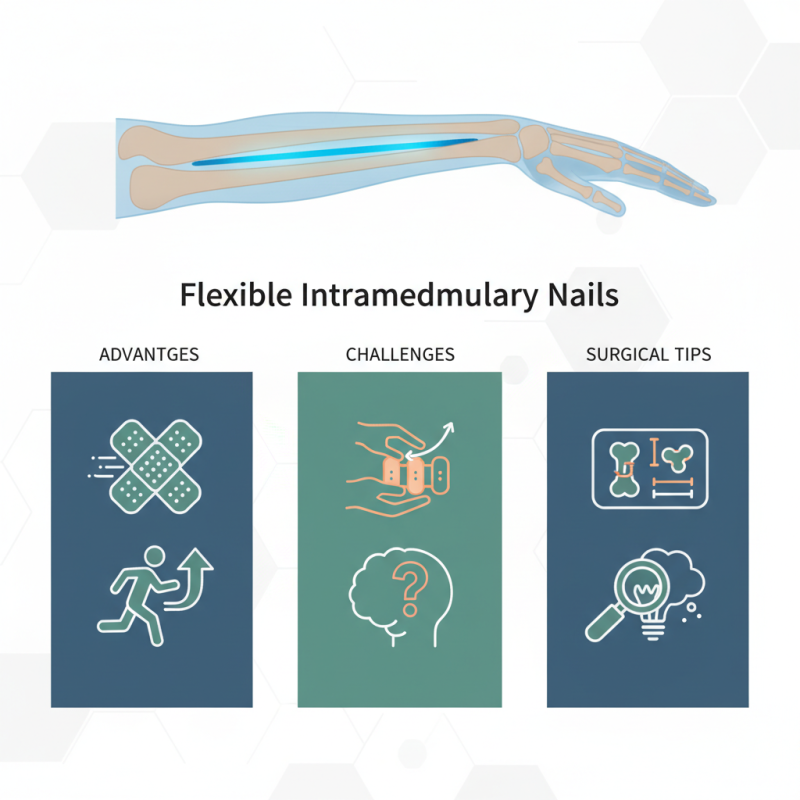
Understanding Flexible Intramedullary Nails and Their Applications
Flexible intramedullary nails (FINs) have gained attention in orthopedic surgery for their ability to stabilize fractures. They are particularly useful in pediatric cases and complex fractures. A study indicated that the average healing time for fractures stabilized with FINs is about 8-12 weeks, although individual patient factors can influence this.
While FINs offer many advantages, challenges remain. Their application requires skillful technique to avoid complications. Inadequate sizing can lead to nail migration, while improper insertion angles may result in malalignment. Reports show that revision rates due to complications can be as high as 10% in some settings.
Surgeons must weigh the benefits against potential risks. Careful preoperative planning is crucial. Understanding the specific anatomy and fracture patterns enhances outcomes. Continuing education on emerging techniques is essential. Reports suggest that surgeons who regularly attend workshops demonstrate lower complication rates. Overall, while FINs are valuable tools, achieving optimal outcomes necessitates reflection on best practices.
Essential Preparation Steps for Surgical Use of Flexible Nails
When preparing for the surgical use of flexible intramedullary nails, thorough planning is crucial. Studies indicate that proper preoperative assessments can significantly reduce complications. For example, a well-conducted study highlighted that only 5% of patients experienced postoperative issues when surgical aplanations were followed. Surgeons must meticulously evaluate patient anatomy and the fracture site. Each detail matters.
During the procedure, having the right instruments ready is essential. Lack of preparation can lead to unnecessary delays. Data reveals that inadequate setup correlates with a 30% increase in surgical time. Surgeons should ensure that all tools are sterilized and within reach. Even minor oversights can result in significant setbacks.
Moreover, communication within the surgical team cannot be overlooked. Clear dialogue before the operation promotes a smooth workflow. A recent report showed that cohesive teams had 40% better outcomes compared to those with poor communication. Flexibility in both planning and execution can enhance efficacy, but it requires constant reflection and adjustment. Each operation is unique. Therefore, continuous learning and adaptation are vital for successful implementation of flexible nails.
Flexible Intramedullary Nails Tips for Effective Surgical Use
| Preparation Step | Description | Importance | Expected Outcome |
|---|---|---|---|
| Patient Assessment | Evaluate the patient's medical history and current condition. | Critical for identifying risks and formulating a surgical plan. | Improved patient safety and surgical outcomes. |
| Surgical Site Preparation | Ensure proper sterilization and marking of the surgical area. | Prevents infections and enhances surgical precision. | Reduced complications and faster recovery times. |
| Instrument Check | Verify that all surgical instruments are available and in good condition. | Ensures a smooth surgical procedure without delays. | Enhances efficiency and minimizes intraoperative risks. |
| Team Briefing | Conduct a pre-surgery briefing with all team members. | Promotes communication and alignment on the surgical plan. | Enhanced team coordination and reduced errors. |
| Flexible Nail Selection | Select the appropriate size and type of flexible nail for the procedure. | Critical for achieving optimal fixation and support. | Successful surgical fixation and alignment of bones. |
Techniques for Proper Placement of Flexible Intramedullary Nails
The effective placement of flexible intramedullary nails requires precision and careful planning. Surgeons must assess the patient’s unique anatomy before proceeding. Each case demands a tailored approach, as standard techniques may not fit all situations.
One key tip is to ensure proper alignment before inserting the nail. Misalignment can lead to complications. Use fluoroscopy during the procedure to verify positioning. It is crucial to visualize the entry point accurately. This step often gets overlooked but is vital for success.
Another important technique is soft tissue handling. Excessive retraction can cause damage. Surgeons should use gentle maneuvering to minimize trauma. Engage with the surrounding tissues delicately. Reflecting on past experiences can guide future decisions. Consider reviewing cases where surgical outcomes were not optimal. Learning from mistakes is essential for improvement.
Post-Operative Care and Monitoring for Successful Outcomes
Post-operative care is crucial for successful outcomes after surgery involving flexible intramedullary nails. Proper monitoring helps detect complications early. Patients should be observed for signs of infection, swelling, or unusual pain. Regular follow-ups can help track progress and identify issues. Simple visual inspections can reveal hidden concerns.
Mobility is important. Early movement, when advised, can promote healing. However, patients need guidance on how much to move. Some may hesitate, fearing pain or injury. Others may rush, risking setbacks. Balancing these approaches requires careful coaching from healthcare professionals. It’s essential to create an environment where patients feel safe to express their fears.
Nutrition plays a role too. A balanced diet aids recovery. Some neglect this aspect, thinking it’s secondary. This can stall healing processes. Encouragement to maintain healthy habits is vital. Patients need reminders about hydration and nutrient intake for optimal recovery. Each small adjustment can lead to significant improvements over time.
Common Complications and Troubleshooting in Nail Procedures
Intramedullary nailing is a common surgical procedure used to treat fractures. However, it comes with complications that must be addressed. In a recent study, around 20% of patients experienced complications related to intramedullary nails. Common issues include infection, non-union, and malalignment. Each of these can extend recovery time and impact patient outcomes.
Infection rates may vary but can reach up to 5% in some cases. Infection can result from surgical technique or implant material. It's crucial to maintain strict sterile protocols. Non-union occurs in about 10%, often linked to inadequate fixation or poor biological response. Malalignment, while less frequent, can lead to functional limitations and require corrective surgeries.
Surgeons face challenges with nail insertion and positioning. Precision is vital, but sometimes, despite the best efforts, complications arise. Techniques such as using intraoperative fluoroscopy can minimize these risks. However, reliance on technology cannot replace surgeon skill. Recognizing inherent procedural risks is essential. Each case offers a chance for learning and improvement. Balancing effectiveness with the potential for complications is key to successful outcomes.