
10 Tips to Choose the Best Magnetic Sunglasses
Choosing the right Magnetic Sunglasses involves more than matching frames with your summer wardrobe. The attachment must sit securely, the lenses should align accurately, and the frame must feel comfortable after several hours outdoors. Small details matter. A loose magnetic clip can shift while driving, hiking, or reading near bright water.
Dr. Gary Heiting, OD, an optical expert and longtime vision-care writer, offers a useful principle: “The best sunglasses are the ones you’ll wear.” That idea fits Magnetic Sunglasses especially well. A technically impressive pair is pointless if its bridge pinches, magnets feel weak, or the lenses create distracting reflections. This guide explores ten practical tips for making a better choice, including UV protection, polarization, lens color, frame compatibility, prescription support, and everyday durability.
Look for clear labeling, reliable construction, and a secure magnetic connection. UV400 protection is important, but buyers should still check the manufacturer’s testing information. Polarized lenses may reduce glare from roads and water, though they can affect the visibility of some digital screens. Fit also deserves honest attention. A frame may look excellent online and feel wrong in person.
There is no perfect pair.
Personal habits change the answer. Someone cycling at noon needs different performance from someone commuting through changing light. Consider real use, not only appearance. These tips cannot replace professional optical advice, especially for prescription needs or sensitive eyes. They can, however, help shoppers ask sharper questions and avoid attractive mistakes.
Define Magnetic Sunglasses and Their Main Features
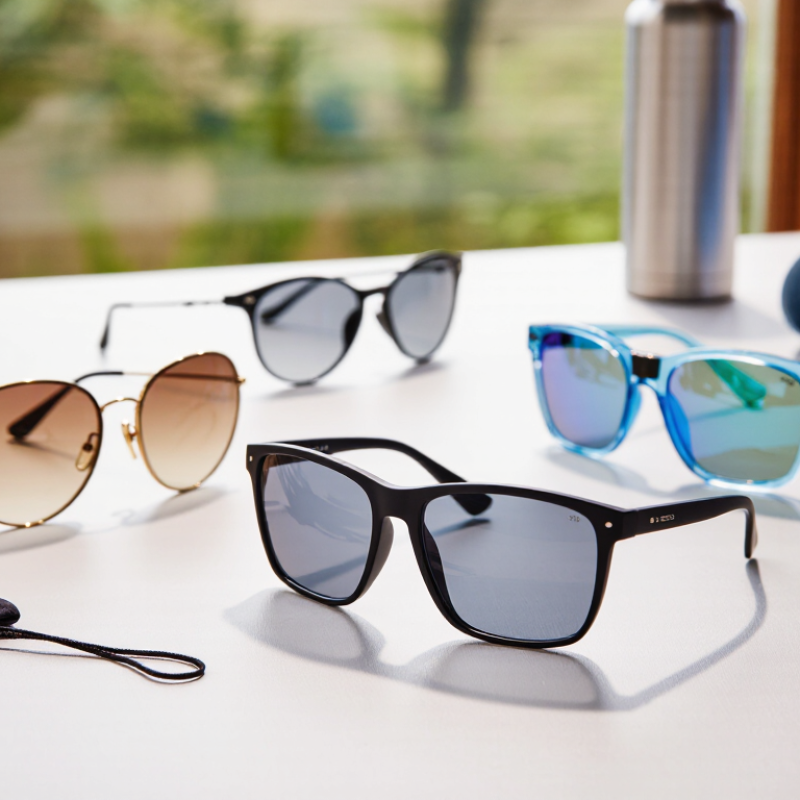
Magnetic sunglasses are eyewear with a removable sun lens or front frame attached by small magnets. They can convert clear prescription glasses into sunglasses within seconds. Their main features include UV protection, lens tint, polarization, magnetic alignment, and frame stability. The magnets should hold firmly without creating pressure near the nose or temples.
The Vision Council’s 2024 Consumer Insights report indicates that about 80% of U.S. adults wear sunglasses occasionally or more often. The World Health Organization also reports that at least 2.2 billion people have near or distance vision impairment. These figures explain the practical appeal of adaptable eyewear. However, dark lenses do not automatically block ultraviolet radiation. Look for documented 100% UVA and UVB protection, or a UV400 specification.
Polarized lenses can reduce reflected glare from roads, water, and glass. They may improve comfort, but they can make some digital screens harder to read. A strong magnet alone proves little. The front lens should sit evenly, with no visible gaps around the bridge. Test the attachment while walking and turning your head. An uneven fit can cause distracting reflections. Some designs also add weight. That detail is easy to overlook. In practice, the best choice depends on lens quality, prescription alignment, and everyday comfort, not magnetic strength alone.
Identify the Right Lens Type for Your Vision and Lifestyle
Choosing the right lens type starts with your vision needs. If you wear prescription glasses, match the magnetic sunglasses to your exact prescription. Ask an optometrist to confirm the power, pupillary distance, and frame fit. Small errors can cause headaches or blurred edges. Do not guess.
Polarized lenses reduce glare from roads, water, and glass, making them useful for driving and outdoor work. However, they may make some digital screens harder to read. Photochromic lenses adjust to changing light, but many darken less inside vehicles. Clear lenses with reliable UV protection suit cloudy days and daily walking. Check the product details for full UVA and UVB protection, not only a dark appearance. Dark lenses without UV protection can be misleading.
Lens color also affects comfort. Gray usually keeps colors natural, while brown can improve contrast on trails. Yellow may brighten low-light scenes, but it is not a substitute for safe nighttime driving. Choose impact-resistant material for active use, and inspect the magnetic connection before buying. It should sit evenly, without sliding or touching your eyelashes. I once underestimated comfort during a long outdoor walk; the lenses were technically suitable, yet the pressure became distracting. That small lesson matters. No lens performs perfectly in every setting, so match the lens to your most frequent activity and arrange a professional eye check when vision changes.
Compare Magnet Strength, Frame Fit, and Attachment Security
10 Tips to Choose the Best Magnetic Sunglasses
Tip 1: Compare magnet strength by opening and closing the attachment several times. It should snap into place without excessive force. Tip 2: Check the connection at both corners. Uneven pull may leave one side loose. Tip 3: Avoid magnets that feel weak after repeated handling. My first pair seemed secure, but it shifted during a windy walk. That mistake taught me to test movement, not just appearance. Tip 4: Look for smooth alignment between the magnetic clip and the frame. Small gaps can collect dust and reduce stability.
Tip 5: Measure frame width against your prescription glasses or everyday frames. A close fit limits sliding and uncomfortable pressure. Tip 6: Check the bridge carefully. It should rest naturally on your nose, without pinching. Tip 7: Move your head from side to side while wearing both layers. If the sunglasses wobble, the frame fit needs reconsideration. Tip 8: Examine the hinge area for flexible, durable construction. Thin materials may feel light but can weaken with frequent use. Comfort matters.
Tip 9: Test attachment security by gently lifting the sunglasses from one side. They should resist twisting without feeling difficult to remove. Tip 10: Wear them for at least ten minutes indoors and outdoors. Notice pressure near your temples, slipping, and visual distortion. A professional optical fitting can identify alignment problems that casual testing misses. I still find fit comparisons imperfect, because face shapes vary more than product measurements suggest. Choose the most stable option you can comfortably wear.
10 Tips to Choose the Best Magnetic Sunglasses - Compare Magnet Strength, Frame Fit, and Attachment Security
| Tip | Selection Dimension | What to Look For | Practical Checking Method | Importance | Potential Warning Sign |
|---|---|---|---|---|---|
| 1 | Magnet Strength | Choose a magnetic connection that holds the overlay firmly without requiring excessive force to remove. Small neodymium magnets are commonly used because they provide strong attraction in a compact size. | Attach the sunglasses and gently shake the frame in several directions. The overlay should remain aligned and should not detach during normal walking or head movement. | High | The overlay slips, rattles, or detaches when the frame is lightly shaken. |
| 2 | Attachment Security | Look for multiple attachment points, accurately positioned magnets, and a stable contact surface. A secure design should resist vertical, horizontal, and twisting movement. | After attachment, gently push the overlay upward, downward, and sideways. It should return to position without visible gaps or rotation. | High | The overlay depends on one central magnet or can be twisted out of alignment easily. |
| 3 | Frame Width and Shape | The magnetic overlay should match the host frame’s width, lens height, bridge shape, and overall curve. Matching geometry helps prevent edge gaps and uneven weight distribution. | Compare the outer edges and bridge before purchase. When fitted, the overlay should sit evenly on both sides without extending sharply beyond the prescription frame. | High | One side sits higher, the bridge does not meet correctly, or the overlay protrudes noticeably. |
| 4 | Bridge Fit | Select a bridge that rests naturally on the nose and does not create pressure points. Adjustable or properly matched bridge designs generally offer better stability. | Wear the glasses for at least 10 minutes. Check for red marks, pinching, sliding, or a gap between the overlay bridge and the base frame. | High | The bridge presses against the nose, leaves deep marks, or causes the lenses to sit unevenly. |
| 5 | Lens Coverage | The tinted lenses should cover the clear lenses sufficiently to reduce side light and reflected glare. Coverage should not obstruct the wearer’s peripheral vision. | View a bright area from different angles. Check whether light enters around the top, bottom, or sides while maintaining a clear field of view. | High | Large uncovered gaps allow significant light leakage or the lens edges block normal peripheral vision. |
| 6 | Lens Protection and UV Performance | Choose lenses labeled for 100% UVA and UVB protection or up to 400 nm UV protection. Polarization can reduce reflected glare but does not replace UV protection. | Review the manufacturer’s lens specification or independent test documentation. Do not judge UV protection by lens darkness alone. | High | The product only states that the lenses are dark, mirrored, or polarized without a clear UV-protection claim. |
| 7 | Weight and Balance | Prefer a lightweight overlay that does not make the front of the glasses feel heavy. Excess front weight can increase nose pressure and cause downward sliding. | Wear the complete set while walking and looking down. The frame should remain stable without frequent adjustment or uncomfortable pressure on the nose and ears. | High | The glasses slide forward, leave pressure marks, or feel noticeably heavier at the front than at the temples. |
| 8 | Hinge and Temple Clearance | The overlay should not interfere with the hinges, temples, or folding action of the base frame. Adequate clearance reduces stress on both frames. | Open and close the temples several times after attaching the overlay. Confirm that no part rubs, catches, or forces the base frame outward. | Medium | The temples scrape the overlay, the hinges cannot fully close, or the frame flexes during use. |
| 9 | Magnet and Coating Durability | Look for magnets that are sealed or securely embedded and for lens coatings designed to resist ordinary scratches. Magnets should not be exposed where moisture can reach them easily. | Inspect the attachment points for gaps, corrosion, loose components, or peeling coating. Store the overlay in a protective case rather than placing it lens-down. | Medium | Magnets are loose, metal parts show early corrosion, or the lens coating marks easily during normal handling. |
| 10 | Removal, Storage, and Compatibility | Choose an overlay that can be removed without bending the frame and that is compatible with the frame’s material, shape, and prescription-lens arrangement. | Remove and reattach it several times using the bridge or designated contact points. Confirm that the frame remains undistorted and that the overlay fits consistently. | Medium | Removal requires pulling one corner forcefully, causes frame distortion, or produces a different fit after repeated use. |
Check UV Protection, Polarization, and Lens Quality
10 Tips to Choose the Best Magnetic Sunglasses
When choosing magnetic sunglasses, check UV protection before appearance. The U.S. Food and Drug Administration recommends lenses blocking 99–100% of UVA and UVB radiation, or carrying a UV400 claim. This matters because the World Health Organization reports that ultraviolet exposure contributes to an estimated 20% of cataract cases worldwide. Ask for test information, not only printed packaging. A darker lens is not automatically safer.
Polarization is useful for reducing reflected glare from roads, water, and snow. It can make driving and outdoor work more comfortable. However, polarization does not guarantee UV protection. I once treated dark, polarized lenses as fully protective. That assumption was careless. Look for both features independently. Magnetic attachments should sit evenly over the prescription lens, without gaps that allow strong side light.
Lens quality deserves close inspection. International standard ISO 12312-1 covers basic requirements for non-prescription sunglasses, including optical performance and protection. Hold each lens toward a straight window frame. If the frame bends while you move the glasses, distortion may be present. Check for bubbles, scratches, loose magnets, and uneven tint. The Vision Council’s consumer research also identifies comfort and fit as major factors in eyewear use, yet fit is easy to overlook. A secure bridge and stable magnetic connection matter more than a fashionable shape. My own mistake was testing them indoors only. Outdoor glare reveals problems quickly.
10 Tips to Choose the Best Magnetic Sunglasses
Check UV protection, polarization, lens quality, fit, and magnetic attachment security.
How to read the chart
UV-A, UV-B, and UV-C are commonly defined by their wavelength ranges. Sunglasses marked UV400 should block ultraviolet radiation up to 400 nanometres, covering the full UV-A and UV-B ranges shown here. Polarization helps reduce reflected glare, but it does not replace verified UV protection.
- Look for verified UV400 or 100% UV protection.
- Choose polarization for glare reduction near roads, water, or snow.
- Check that the lenses have even tint without visible distortion.
- Prefer impact-resistant lens materials for daily use.
- Inspect the lens surface for scratches, bubbles, or coating defects.
- Confirm that magnetic attachments align securely with the frame.
- Make sure the magnetic connection does not obstruct your vision.
- Check frame coverage to limit light entering from the sides.
- Choose a comfortable fit that stays stable during movement.
- Replace lenses when damage or coating deterioration affects clarity.
Evaluate Comfort, Durability, Style, and Overall Value
Choosing magnetic sunglasses should begin with comfort, not appearance. Wear them for ten minutes and notice pressure around your nose, ears, and temples. A comfortable frame should stay secure when you look down, yet remain easy to remove. The magnetic connection should align smoothly without forcing the clip into place. Check whether the added lens creates glare, distortion, or distracting reflections. Clear vision matters more than a fashionable shape.
Durability becomes visible through small details. Examine the hinge movement, frame edges, magnet housing, and lens attachment points. The clip should sit evenly and resist minor bumps during normal use. Keep the sunglasses in a firm case, because loose storage can scratch lenses and weaken the attachment system. Look for reliable information about UV protection and lens materials, preferably from documented testing rather than vague packaging claims. I once judged a frame by its sturdy feel alone. That was too quick. Repeated handling revealed a loose hinge.
Style still affects daily value. Choose a shape that suits your face and works with your usual clothing, but avoid designs that make the magnetic clip look obviously uneven. Neutral colors often remain useful across seasons, while lighter frames may show dust more quickly. Compare the full cost, including replacement clips, cleaning supplies, warranty terms, and expected service life. The cheapest option may become expensive after one damaged lens. A higher price is not automatically better. Value comes from dependable comfort, lasting construction, practical appearance, and honest performance in real use.