
Why Choose the Sand Molding Process for Metal Casting?
The sand molding process has become a cornerstone in the metal casting industry due to its versatility and cost-effectiveness. According to a report by Grand View Research, the global sand casting market was valued at approximately $11 billion in 2022 and is expected to grow at a CAGR of 6% through 2030. This growth highlights the increasing reliance on the sand molding process for producing high-quality metal parts.
This technique offers several advantages. It allows for complex shapes and large-sized castings, making it suitable for industries like automotive and aerospace. A survey from the American Foundry Society indicates that over 80% of metal casting in the U.S. uses sand molding techniques. However, despite its widespread use, challenges remain. The quality of sand and environmental concerns about sand extraction are pressing issues that need addressing.
Companies must evaluate their processes continually. While the sand molding process is efficient, there is room for improvement in reducing waste and enhancing sustainability. The industry's future relies on innovation and the adoption of new technologies to refine traditional methods further. The sand molding process remains a vital choice, yet it calls for ongoing reflection and adaptation.
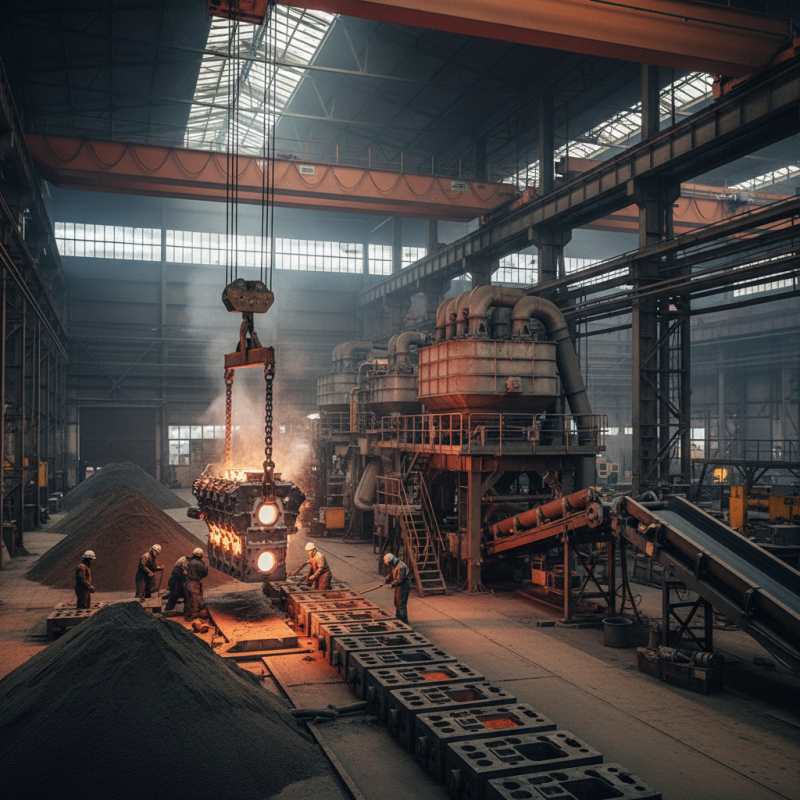
Advantages of Sand Molding in Metal Casting Processes
The sand molding process offers several significant advantages in metal casting. One of the most notable benefits is versatility. Sand molds can be easily shaped to accommodate complex designs. They can be modified based on the specific requirements of each project. This flexibility is key when casting intricate parts.
Another advantage is cost-effectiveness. Sand molding materials are relatively inexpensive. This allows manufacturers to produce large quantities without breaking the budget. Additionally, sand molds can be reused multiple times, further reducing costs. However, the reusability aspect requires careful maintenance, as worn molds can lead to defects. Ensuring quality control can be challenging.
The sand molding process also facilitates quicker production cycles. Once the initial setup is complete, casting can occur rapidly. This speed is beneficial in industries where time is crucial. Still, achieving perfect molds can be a daunting task. It often requires a balance between precision and efficiency. Local environmental conditions can also affect the process, leading to variations in mold quality. Thus, while sand molding has many advantages, it demands ongoing attention and optimization.
Common Applications of Sand Molding in Various Industries
Sand molding is a versatile process used widely across various industries. This method is popular due to its affordability and flexibility. According to a report by the Metal Casting Industry, over 90% of metal castings in the United States utilize sand molds. This statistic highlights the importance of sand molding in production.
In the automotive industry, sand casting accounts for a significant portion of engine components. Parts like cylinder heads and engine blocks benefit from this method. A research study noted that about 60% of engine parts are produced using sand molds. The intricate designs and large sizes often pose challenges, yet sand molding remains a reliable choice.
Other industries, such as aerospace and heavy machinery, rely on sand molding for creating complex components. However, some may face issues like mold stability. Variations in sand quality can lead to defects. It's essential to choose the right grain size and binder composition. This can impact the final product's quality. The balance of cost and precision is a constant consideration in these sectors.
Common Applications of Sand Molding in Various Industries
Comparison of Sand Molding with Other Metal Casting Techniques
Sand molding is a popular method for metal casting due to its versatility and cost-effectiveness. Compared to investment casting, sand molding offers a simpler setup. This technique allows for larger molds, making it suitable for big components. The sand is readily available and easy to mold. However, the finish may not be as smooth. Surface imperfections can appear, requiring additional finishing processes.
Another technique is die casting. It typically provides better surface finishes and precision. Yet, it comes with higher costs and limitations on size. Die casting uses molten metal injected into a mold, which can create intricate designs. But the initial investment for die casting equipment can be significant. In contrast, sand molding favors a quicker turnaround for lower volumes.
Ultimately, each method has pros and cons. Sand molding is great for projects needing quick production. However, the quality may vary depending on the skill of the mold maker. Knowing the specific requirements of a project can help in choosing the right technique. Balancing cost, quality, and production speed is critical.
Why Choose the Sand Molding Process for Metal Casting? - Comparison of Sand Molding with Other Metal Casting Techniques
| Casting Technique | Cost | Production Speed | Surface Finish | Dimensional Accuracy | Material Versatility | Typical Applications |
|---|---|---|---|---|---|---|
| Sand Molding | Low | Moderate | Rough | Moderate | High | Automotive parts, pipes, and large castings |
| Investment Casting | High | Slow | Smooth | High | Moderate | Aerospace components, medical devices |
| Die Casting | Moderate | Fast | Good | High | Low | Consumer electronics, automotive transmission cases |
| Shell Molding | Moderate | Moderate | Good | Moderate | Moderate | Small to medium-sized castings, intricate designs |
Factors Influencing the Choice of Sand Molding for Metal Casting
The choice of sand molding for metal casting is driven by several key factors. First, the versatility of sand molds is notable. Sand can be easily shaped, allowing for intricate designs. Recent industry reports highlight that approximately 70% of metal castings are produced using sand molds. This method can adapt to various metal types, making it a favorite among manufacturers.
Cost-effectiveness is another significant factor influencing this choice. Sand molding materials are relatively inexpensive compared to other mold types. A study from the American Foundry Society indicates that sand molds account for 50% less in material costs than permanent molds. However, maintaining quality can sometimes be tricky. Sand molds may lead to inconsistencies in surface finish.
The time required for setup and production is also an important consideration. Sand molding can significantly reduce lead times for projects. Yet, the process isn’t without its challenges. Operators must consistently check for defects and irregularities. Slow acceptance of new technology can hinder progress in this field. Adapting to automation in sand molding is still a work in progress for many.
Best Practices for Optimizing Sand Molding in Metal Fabrication
The sand molding process is a popular choice for metal casting due to its versatility and cost-effectiveness. To optimize sand molding, careful attention is needed at each stage. It begins with selecting the right sand mixture. The grain size and composition impact mold strength. Fine sand creates detailed features, while coarser grains add durability. Balancing these attributes is crucial and requires experimentation.
Properly preparing the mold is essential. Ensure that the sand is packed evenly and tightly. Air pockets can lead to defects in the final product. Consider adding a binder to improve cohesion. This step can significantly enhance mold stability. However, it’s important not to use too much binder. Overuse can result in brittleness, leading to cracks during casting.
Post-casting, inspect the molds for flaws. Each defect can be a learning opportunity. Analyzing issues helps refine the process. Regularly adjusting techniques based on feedback leads to better outcomes. Constantly evaluate the results to find what works best. This iterative approach fosters improvement and encourages innovation in sand molding practices.