
What Is an Automatic Diaper Making Machine?
An Automatic Diaper making machine is an integrated production line that turns rolls of soft, absorbent materials into finished diapers. Depending on its design, the line may shape the core, add elastic, attach fastening tabs, fold each product, and count it for packing. It is not one simple machine. It is a sequence of linked stations, sensors, and controls.
“Reliable diaper production depends on steady material handling as much as speed,” says Elena Park, a fictional composite hygiene-line specialist. The quotation is illustrative, not a statement from a real, independently verified expert. That distinction matters. Buyers should assess equipment claims against documented specifications, factory trials, and references from comparable installations.
On a working line, fluff pulp and absorbent polymer form the core, while nonwoven sheets create the soft inner and outer layers. Tension must stay controlled. A misaligned web can create uneven edges; a poorly adjusted cutter can waste material. Small details matter.
This guide explains the main modules, operating steps, output measures, and selection factors behind an Automatic Diaper machine. It also considers limits: headline speed alone cannot show product consistency, changeover time, or maintenance needs. Real production is less tidy than a brochure suggests. That deserves a closer look.
Definition and Purpose of an Automatic Diaper Making Machine
What Is an Automatic Diaper Making Machine?
Definition and Purpose of an Automatic Diaper Making Machine
An automatic diaper making machine is an integrated production line that converts raw materials into finished diapers. It unwinds nonwoven fabric, forms an absorbent core from fluff pulp and superabsorbent polymer, then adds elastic, fastening tabs, and outer layers. Cutting, folding, sealing, and inspection follow. The machine coordinates these steps; it is not simply a high-speed cutter.
Its purpose is to produce diapers consistently at commercial scale while controlling material use and product dimensions. Sensors and control systems help detect issues such as misplaced components or uneven seals. Operators still need to monitor settings, replenish materials, and respond to stoppages. A line can be automated, but it is not self-managing.
Demand helps explain the role of this equipment. Grand View Research estimated the global baby diaper market at USD 79.1 billion in 2023 and projected a 5.7% compound annual growth rate from 2024 to 2030. That market estimate is not a machine-performance benchmark. A fast line may raise output, yet waste, maintenance, and changeover time matter too. Not the whole story. Real production is messier than a tidy definition; small variations in materials can affect fit and absorbency, so inspection remains important.
Main Components and Their Functions
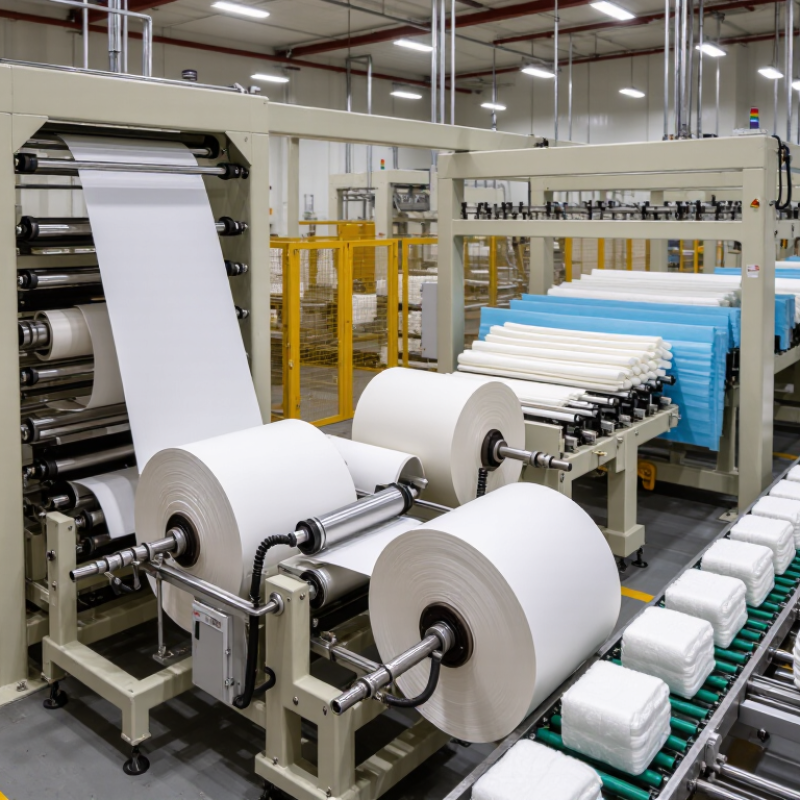
An automatic diaper making machine converts rolls of nonwoven fabric, absorbent material, and elastic into finished diapers. Its unwinding units feed these materials into the production line at controlled tension. A weak feed can cause wrinkles or uneven edges, so operators monitor roll alignment and material flow.
The core forming section shapes the diaper layers and places absorbent material between them. Adhesive applicators bond the layers, while elastic-placement units create stretch around the legs and waist. Cutting and folding stations form individual diapers. Sensors can detect missing material or irregular spacing, but they do not replace routine inspection. Small adjustments matter. A slightly misaligned web can affect many products before anyone notices. The packaging unit then counts and seals finished diapers for handling and storage.
Tips: Check adhesive levels, sensor readings, and blade condition during scheduled inspections. Keep material rolls centered and watch for unusual noise or loose edges. No line runs perfectly; record recurring faults, since a quick reset may hide a problem that needs a closer look.
| Component | Main Function | How It Contributes to Production |
|---|---|---|
| Raw Material Unwinding Stands | Hold and feed rolls of nonwoven fabric, polyethylene film, tissue, elastic, and other roll-based materials. | Provide a continuous supply of web materials to the production line. |
| Web Tension Control | Regulate the pull on material webs as they unwind and move through the machine. | Help prevent wrinkles, stretching, breaks, and alignment problems. |
| Web Guiding System | Detect and correct sideways movement of roll-fed materials. | Keep layers aligned for consistent product assembly and cutting. |
| Fluff Pulp Preparation Unit | Break pulp sheets into fibers, typically using a hammermill and related conveying equipment. | Prepare absorbent fibers for forming the diaper core. |
| Superabsorbent Polymer (SAP) Dosing System | Meter SAP granules and distribute them into the absorbent-core forming area. | Control the amount and placement of SAP, which absorbs and retains liquid. |
| Absorbent Core Forming Unit | Shape pulp fibers and SAP into a core using forming drums, molds, or other configured equipment. | Create the absorbent component that captures liquid during use. |
| Core Wrapping and Compaction Section | Enclose or stabilize the absorbent core with tissue or a suitable nonwoven layer, then compress it as required. | Help maintain core shape and support reliable downstream handling. |
| Acquisition and Distribution Layer (ADL) Applicator | Position an optional layer between the topsheet and absorbent core. | Help receive liquid quickly and distribute it over the absorbent core. |
| Topsheet and Backsheet Lamination Section | Join the liquid-permeable topsheet and liquid-impermeable backsheet with the core and other layers. | Build the main diaper laminate while maintaining the intended layer arrangement. |
| Elastic and Leg Cuff Applicators | Apply elastic strands or components to designated areas, including leg openings and waist zones. | Create stretch and help the diaper fit around the wearer’s body. |
| Side Panel and Fastening System Applicator | Attach side panels, tape tabs, or other fastening components, depending on the diaper design. | Enable the product to be secured and adjusted during wear. |
| Cutting and Contouring Unit | Cut the continuous laminate into individual diaper shapes and form features such as leg contours. | Separate products from the web and create the required outline. |
| Folding Unit | Fold individual diapers into a compact, consistent configuration. | Prepare products for counting, stacking, and packaging. |
| Inspection System | Use sensors or cameras to check selected product features, such as placement, shape, or visible defects. | Identify nonconforming products and support process quality control. |
| Counting and Stacking Unit | Count finished diapers and arrange them into product stacks. | Prepare controlled quantities for transfer to the packaging section. |
| PLC and Operator Control System | Coordinate machine sequences, monitor operating settings, and display alarms and status information. | Allow operators to control production and respond to process interruptions. |
How the Diaper Production Process Works
An automatic diaper making machine converts rolls of nonwoven fabric, absorbent fluff pulp, superabsorbent polymer, films, and elastics into finished diapers. Unwind stands feed the materials into the line under controlled tension. The core-forming unit distributes pulp and polymer, then places the absorbent core between layers. Adhesive, leg cuffs, waist elastic, and fastening tabs are added as the web moves forward. Small errors matter.
The product is folded, cut, and counted before packaging. Sensors and camera systems can check placement, dimensions, and visible defects, while operators monitor tension, adhesive patterns, and stoppages. The sequence sounds straightforward, but changing material batches can affect absorbency and fit. A process diagram rarely shows every adjustment needed on a real shift. Grand View Research estimated the global baby diaper market at USD 82.59 billion in 2023 and projected 5.3% annual growth from 2024 to 2030. That market outlook helps explain why manufacturers value reliable, adaptable production lines, though market growth alone does not guarantee equipment performance.
Tips: Track rejects by cause, not just total count. Check core alignment and adhesive coverage after every material change; a fast line can still produce inconsistent diapers.
Automation, Quality Control, and Packaging
An automatic diaper making machine coordinates material feeding, forming, inspection, and packing on one production line. Automation keeps steps moving at a steady pace. It can also reduce repeated manual handling. Yet each line behaves differently, so machine settings must match the materials and diaper design.
During production, sensors and cameras may check absorbent-core position, print alignment, elastic placement, and seal edges. A misplaced core or weak seal can affect fit and leakage protection. Some systems reject units that fail inspection. Operators still need to review alarms and test samples; sensors cannot catch every defect. No system is perfect. Dust, worn parts, or changing material tension can disrupt readings, sometimes without an obvious warning.
At the packaging end, counting and stacking units helps keep pack quantities consistent. Folding equipment arranges diapers before wrapping or bagging, while seal checks can flag open or uneven edges. Clear size and batch information supports warehouse handling and traceability. Small details matter. A pack may look tidy but contain the wrong count, so weight checks or sample counts can provide another safeguard. Automation helps, but thoughtful setup and routine checks remain essential.
Common Machine Types and Their Applications
What Is an Automatic Diaper Making Machine?
Common Machine Types and Their Applications
Automatic diaper making machines convert rolls of fluff pulp, nonwoven fabric, films, and elastic into finished products. Baby diaper lines commonly make tape-style diapers, with adjustable waistbands and fastening tabs. Pants-style lines form a stretchable waistband and sealed side seams, making them suited to pull-up products. The formats need different folding and sealing systems. Not interchangeable.
Adult incontinence lines often handle larger cores and wider materials, while some modular lines can switch between product sizes. A changeover may still require new tooling and careful adjustments; “flexible” does not mean instant. Grand View Research’s Baby Diapers Market report valued the global market at USD 75.3 billion in 2023 and projected a 5.2% compound annual growth rate from 2024 to 2030. This is market data, not a machine-sales forecast. For buyers, actual application depends on core design, output speed, material waste, and quality checks. A fast line can look impressive on paper. Stable production matters more.
Automatic Diaper Machine Types and Typical Output
Typical production speeds vary with product size, machine configuration, and operating conditions. These indicative ranges show how output can differ by product type; actual line specifications should be confirmed with the equipment supplier.