
What Is an Alzheimer Biomarker and How Is It Used?
An Alzheimer Biomarker is a measurable sign of biological changes linked to Alzheimer’s disease. It may be detected in blood, cerebrospinal fluid, or brain imaging. Common examples include amyloid and tau proteins, which can build up or change as the disease develops. Other measures may show injury to brain cells. These findings help clinicians understand what may be happening beneath the surface.
Not a verdict.
A clinician may use biomarker results alongside symptoms, medical history, cognitive testing, and neurological examination. For example, a blood test or brain scan may help clarify whether Alzheimer’s-related changes could explain memory problems. Results can also guide decisions about further testing or eligibility for certain treatments. They cannot, on their own, describe a person’s daily abilities or predict exactly how symptoms will progress. That distinction matters.
Testing has limits. A result can be affected by the type of test, the person’s health, and the stage of evaluation. Some blood-based tests are increasingly available, but their use and interpretation depend on clinical guidance and local practice. A positive result does not automatically mean someone has dementia, and a negative result may not answer every question. The picture is useful, but not complete. Biomarkers are one part of a careful assessment, not a replacement for conversation with a qualified healthcare professional. Understanding what a test can—and cannot—show helps patients and families make more informed choices.
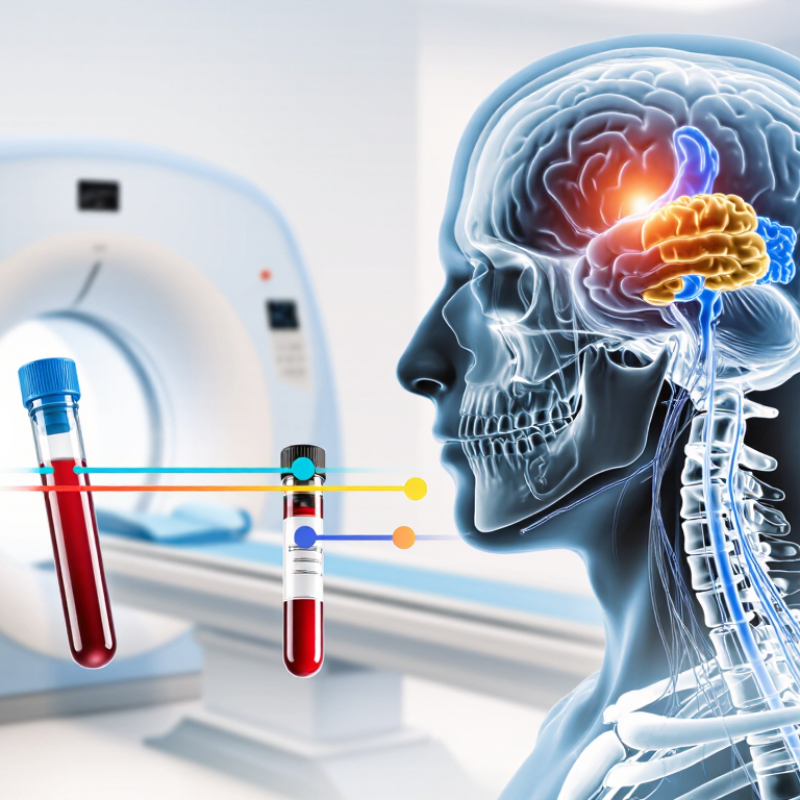
What an Alzheimer’s Biomarker Measures
An Alzheimer’s biomarker is a measurable sign of a process linked to the disease. It may reveal changes before memory problems become obvious. Some biomarkers track amyloid proteins, which can build up into plaques in the brain. Others measure tau changes, nerve-cell injury, or loss of brain tissue. These signals describe different parts of the disease—not one complete picture.
Biomarkers can be measured in blood or spinal fluid, or observed through brain imaging. A blood or spinal-fluid test may measure particular proteins. A scan can show patterns of amyloid buildup or brain shrinkage. Results do not directly measure how well someone remembers a conversation or manages daily tasks. Nor does one result, by itself, explain every symptom. That distinction matters. A number can look more certain than it really is, especially when test methods and clinical context differ.
Tips: Ask what process a test measures, what its result can and cannot show, and how it fits with symptoms and medical history. A clinician may consider several findings together. Keep a written list of questions; details are easy to forget during an appointment.
What Is an Alzheimer’s Biomarker and How Is It Used? – What an Alzheimer’s Biomarker Measures
| Biomarker | What It Measures | Sample or Method | How It Is Used | Important Considerations |
|---|---|---|---|---|
| Amyloid PET | Fibrillar amyloid-beta plaque in the brain. | PET brain scan using an amyloid-binding tracer. | Helps determine whether substantial amyloid pathology is present, supporting diagnostic assessment and eligibility evaluation for some amyloid-targeting treatments. | A positive scan does not by itself prove that amyloid is causing a person’s symptoms. Plaques can also be present in some people without noticeable cognitive impairment. |
| CSF amyloid-beta 42/40 ratio | The relative amounts of amyloid-beta 42 and amyloid-beta 40 in cerebrospinal fluid; a lower ratio is associated with amyloid deposition in the brain. | Cerebrospinal fluid collected by lumbar puncture. | Provides evidence of amyloid pathology as part of a specialist’s diagnostic evaluation. | Results should be interpreted using the laboratory’s validated methods and reference ranges, alongside symptoms and other findings. |
| CSF phosphorylated tau (p-tau) | Phosphorylated forms of tau protein associated with Alzheimer-related changes. | Cerebrospinal fluid collected by lumbar puncture. | Can help assess Alzheimer-related tau changes, often in combination with amyloid measures. | A biomarker result is not a direct measure of memory or day-to-day ability; interpretation depends on the overall clinical picture. |
| Blood p-tau (including p-tau217 or p-tau181) | Specific phosphorylated tau proteins in blood that are associated with Alzheimer-related brain pathology. | Blood sample analyzed with a specific laboratory assay. | May help estimate the likelihood of Alzheimer pathology and guide decisions about further testing, when an appropriately validated test is available. | Performance varies by assay and patient group. A blood result may need confirmation with other tests and should not be interpreted without clinical context. |
| Blood amyloid-beta measures | Levels or ratios of amyloid-beta forms in blood, which may reflect amyloid-related changes. | Blood sample analyzed with a specific laboratory assay. | Can contribute to assessment or help identify people who may need additional evaluation, depending on the test and clinical setting. | Blood levels can be influenced by factors beyond brain amyloid. Results are assay-dependent and are not interchangeable with PET or CSF findings. |
| Tau PET | Abnormal aggregated tau in the brain, including its distribution across brain regions. | PET brain scan using a tau-binding tracer. | Can provide information about the location and extent of tau pathology and support specialist assessment. | Availability and clinical use vary. A scan must be interpreted alongside symptoms, examination, and other tests. |
| Structural brain MRI | Brain anatomy, including volume loss in regions such as the hippocampus and other areas involved in memory. | MRI scan of the brain. | Helps assess patterns of brain atrophy and identify other possible causes of cognitive symptoms, such as stroke or a mass. | Atrophy is not specific to Alzheimer’s disease and can occur with aging and other conditions. MRI does not directly measure amyloid or tau. |
| FDG PET | Patterns of glucose use in the brain, which reflect aspects of neuronal activity and function. | PET brain scan using a glucose-like tracer. | May help characterize patterns of brain dysfunction when the cause of cognitive symptoms is uncertain. | Reduced glucose use is not specific to Alzheimer’s disease and can occur in other neurological conditions. |
Note: Alzheimer’s biomarkers measure biological signs related to disease processes; they do not directly measure a person’s symptoms, independence, or future course. A qualified clinician interprets results together with medical history, cognitive assessment, and other relevant findings.