
2026 Top Interactive Sport Games for Global Buyers
The 2026 market for Interactive Sport Games is becoming more practical, measurable, and globally accessible. Buyers now expect more than bright screens and quick excitement. They examine player safety, equipment durability, software stability, and long-term maintenance. A sports center in Dubai may need heat-resistant hardware, while a family venue in Germany may prioritize accessibility and energy efficiency. Local conditions matter.
Katie Salen, a respected game-design scholar, wrote, “Games are systems in which players engage in artificial conflict, defined by rules, that results in a quantifiable outcome.” This idea remains valuable for interActive Sports equipment. Strong products create clear goals, immediate feedback, and fair competition. Motion sensors, projection systems, responsive floors, and connected scoring can turn a small indoor area into an active play zone. The experience should feel natural, not overly technical.
Performance matters.
This guide reviews the 2026 Top Interactive Sport Games for Global Buyers, focusing on commercial value and real-world use. It considers installation requirements, player capacity, training value, software updates, warranty support, and return on investment. It also compares products for schools, resorts, shopping centers, fitness clubs, and entertainment venues. Some claims from suppliers may sound impressive but deserve closer testing. Marketing numbers are not always equal to daily performance.
A successful purchase requires practical judgment. Buyers should request demonstrations, inspect materials, and evaluate customer support before signing agreements. Interactive Sport Games can increase participation, but they cannot replace thoughtful facility design. The market is developing quickly. Some products will improve; others may disappoint. That uncertainty deserves attention.
What Are Interactive Sport Games and How Do They Work?
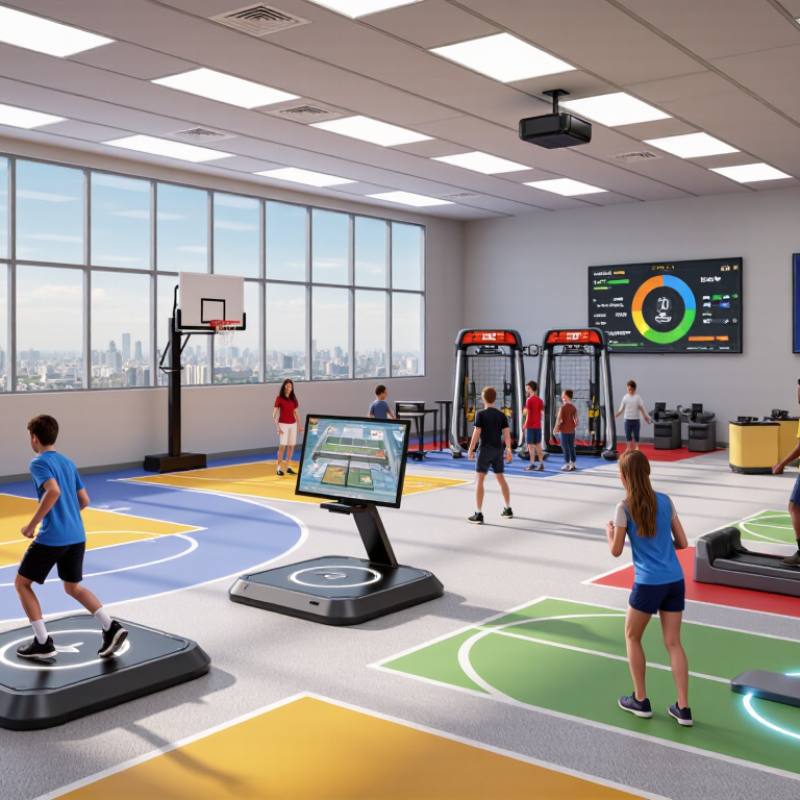
Interactive sport games combine physical movement with digital feedback. Players may kick, swing, run, or aim at a projected target. Cameras, motion sensors, pressure plates, and wearable devices track each action. Software then converts movement into scores, challenges, or virtual opponents.
The system usually follows a simple loop. A sensor captures body position and speed. An algorithm compares the movement with preset rules. The screen responds within milliseconds. A dashboard can record accuracy, reaction time, calories, and progress. Some systems also adjust difficulty automatically, keeping beginners involved while testing experienced players. The experience feels like sport, but the rules are partly engineered.
The 2024 Global Games Market Report estimated 3.42 billion players worldwide and about 187.7 billion dollars in game revenue. That large audience creates strong potential for interactive sports in entertainment, education, and commercial venues. Grand View Research’s 2024 virtual reality market analysis projected a 27.5% compound annual growth rate from 2023 to 2030. Yet growth does not guarantee good play. A small tracking delay can break immersion. Poor lighting may reduce accuracy. Safety zones also need careful design, especially when players move quickly. From practical testing, clear feedback matters more than excessive effects. The technology is impressive, but it still needs human-centered adjustment.
2026 Top Interactive Sport Games for Global Buyers - What Are Interactive Sport Games and How Do They Work?
| Interactive Sport Game Type | How It Works | Primary Interaction Technology | Typical Space Requirement | Typical Users per Session | Main Buyer Applications | Key Procurement Considerations |
|---|---|---|---|---|---|---|
| Motion-Based Sports Simulators | Players perform physical movements while sensors translate speed, angle, timing, or impact into an on-screen sports result. | Optical tracking, inertial sensors, pressure sensors, cameras, and large displays. | Approximately 8–25 m² per installation, depending on the activity and safety zone. | 1–4 players. | Family entertainment centers, recreation venues, hotels, schools, and training facilities. | Sensor accuracy, equipment durability, safe movement clearance, calibration, and multilingual software. |
| Virtual Reality Sports Games | A head-mounted display places the player in a simulated sports environment, while tracked controllers or hand movements control the action. | Head-mounted display, six-degree-of-freedom tracking, hand or controller tracking, and spatial audio. | Approximately 4–16 m² per player, with additional clearance recommended for supervised venues. | 1–8 players, depending on the network and venue configuration. | Arcades, sports attractions, education, corporate events, and indoor recreation. | Motion comfort, hygiene management, battery life, content licensing, user onboarding, and device replacement cost. |
| Augmented Reality Sports Games | Digital targets, scores, or opponents are overlaid on the real environment through glasses, mobile devices, or projected visuals. | Cameras, spatial mapping, location tracking, mobile displays, or see-through optical systems. | Approximately 10–100 m², based on the number of players and the mapped play area. | 2–12 players. | Museums, shopping centers, tourism venues, schools, and temporary events. | Indoor positioning reliability, lighting conditions, network performance, device compatibility, and privacy controls. |
| Projection-Based Interactive Games | A projector displays a playing field or targets on a floor or wall, and cameras detect players, objects, or movement in real time. | High-brightness projection, computer vision, depth cameras, and real-time game software. | Approximately 15–80 m². | 2–20 players. | Indoor playgrounds, resorts, schools, community centers, and family entertainment venues. | Ambient-light performance, ceiling height, floor protection, projector maintenance, and fast game reset. |
| Connected Fitness and Exergames | Physical exercise is combined with game objectives, feedback, scoring, or progression to encourage sustained activity. | Wearable sensors, heart-rate monitoring, motion tracking, touchscreens, and connected applications. | Approximately 2–10 m² per user. | 1–20 users, depending on whether the system is personal or group-based. | Fitness clubs, schools, rehabilitation programs, workplaces, and home-use distributors. | Measurement consistency, data protection, adjustable difficulty, cleaning requirements, and subscription structure. |
| Interactive Wall and Floor Games | Players touch, kick, throw at, or move toward digital targets that respond immediately with sound, light, and score feedback. | LED panels, infrared touch detection, pressure sensors, cameras, and interactive software. | Approximately 6–40 m². | 1–10 players. | Retail attractions, children's activity centers, schools, museums, and event installations. | Impact resistance, screen brightness, modular repair, accessibility, noise level, and content update options. |
| Interactive Table Sports Games | Players use physical controls, paddles, tokens, or touch surfaces while the table records actions and displays the game state. | Touch detection, optical sensors, embedded displays, buttons, and wireless controllers. | Approximately 2–8 m² per table, including standing and access space. | 2–8 players. | Hospitality venues, family entertainment centers, youth clubs, and waiting areas. | Tabletop durability, hygiene, accessibility, game turnover time, power consumption, and payment integration. |
| Multi-Station Competitive Sport Games | Several players compete simultaneously across connected stations, with centralized scoring, rankings, and timed rounds. | Networked game servers, cameras, sensors, displays, RFID or QR identification, and live scoring. | Approximately 40–250 m² for a complete attraction. | 4–32 players. | Large entertainment venues, resorts, corporate team-building, sports events, and tourism destinations. | Network stability, throughput, queue management, operator controls, scoring fairness, and safety supervision. |
| Sports Training and Skill-Assessment Systems | The system measures repeatable movements or performance outcomes and provides data-based feedback for practice and evaluation. | High-speed cameras, wearable sensors, radar or optical measurement, analytics software, and display dashboards. | Approximately 10–150 m², depending on the sport and measurement distance. | 1–10 users. | Sports academies, schools, clubs, rehabilitation facilities, and professional training centers. | Measurement validity, repeatability, data ownership, reporting tools, user profiles, and technical support. |